#SomeOfUsAreBrave 2026
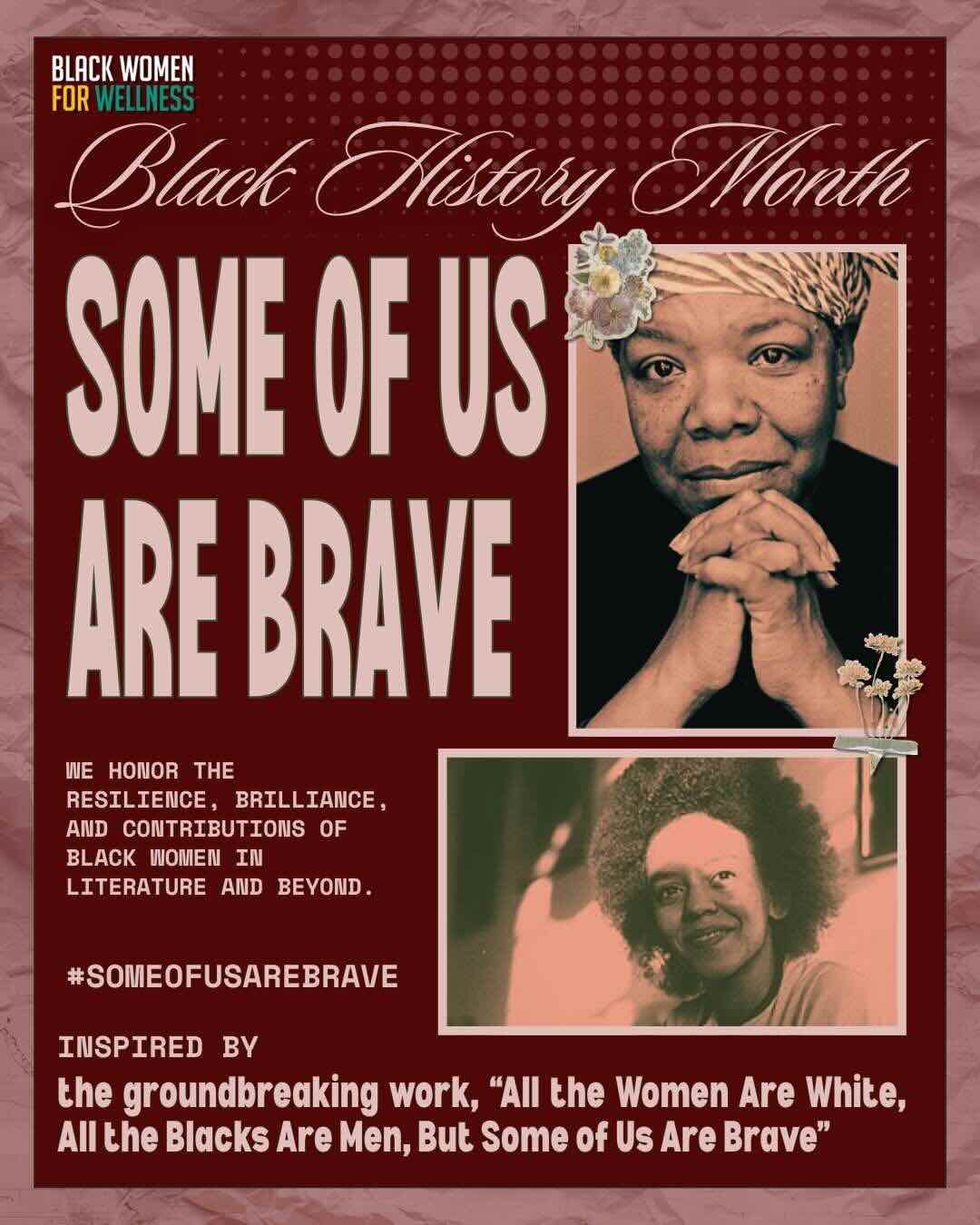

Angela Y. Davis

Angela Davis is a legendary activist and scholar whose work has defined the modern understanding of intersectional liberation.
From her 1960s leadership in the Black Panther Party to her role as a Professor Emerita at UC Santa Cruz, she has spent decades dismantling the prison-industrial complex.
Today, she remains a global icon, challenging the world to confront the deep-seated connections between racism, capitalism, and state violence.
“Women, Race & Class”
A powerful historical analysis proving that the feminist movement fails whenever it ignores how classism and white supremacy specifically marginalize Black and working-class women.
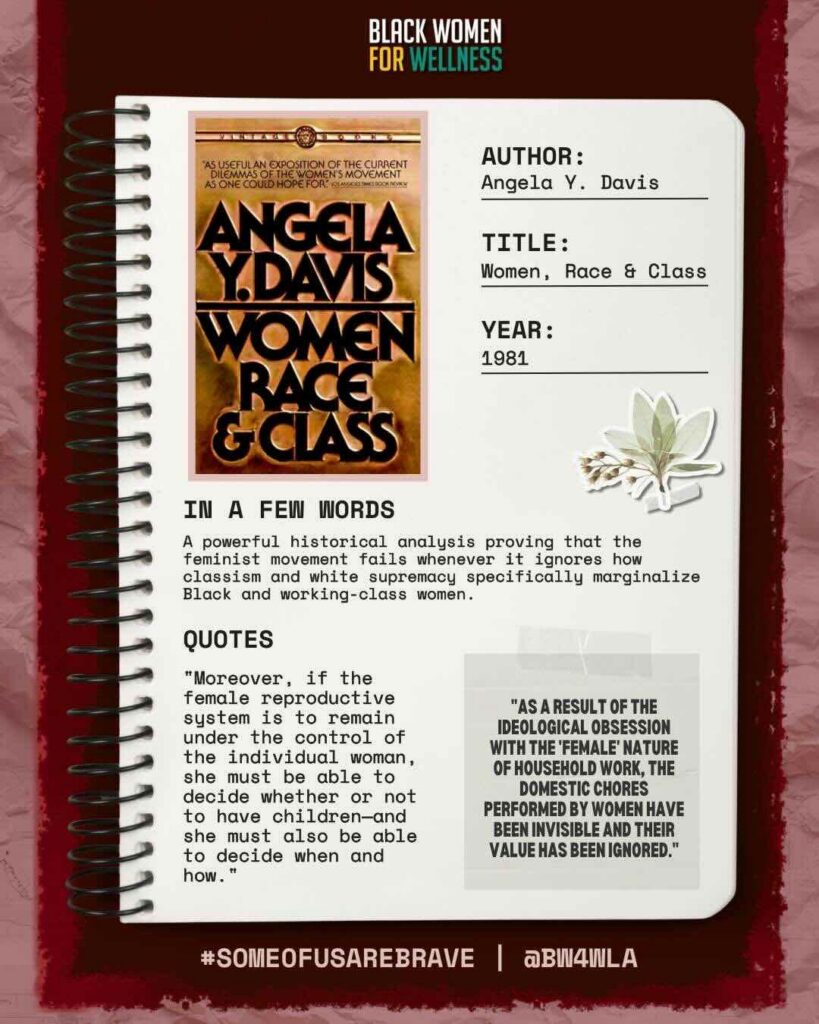
Quote:
“Moreover, if the female reproductive system is to remain under the control of the individual woman, she must be able to decide whether or not to have children—and she must also be able to decide when and how.”
Ruha Benjamin
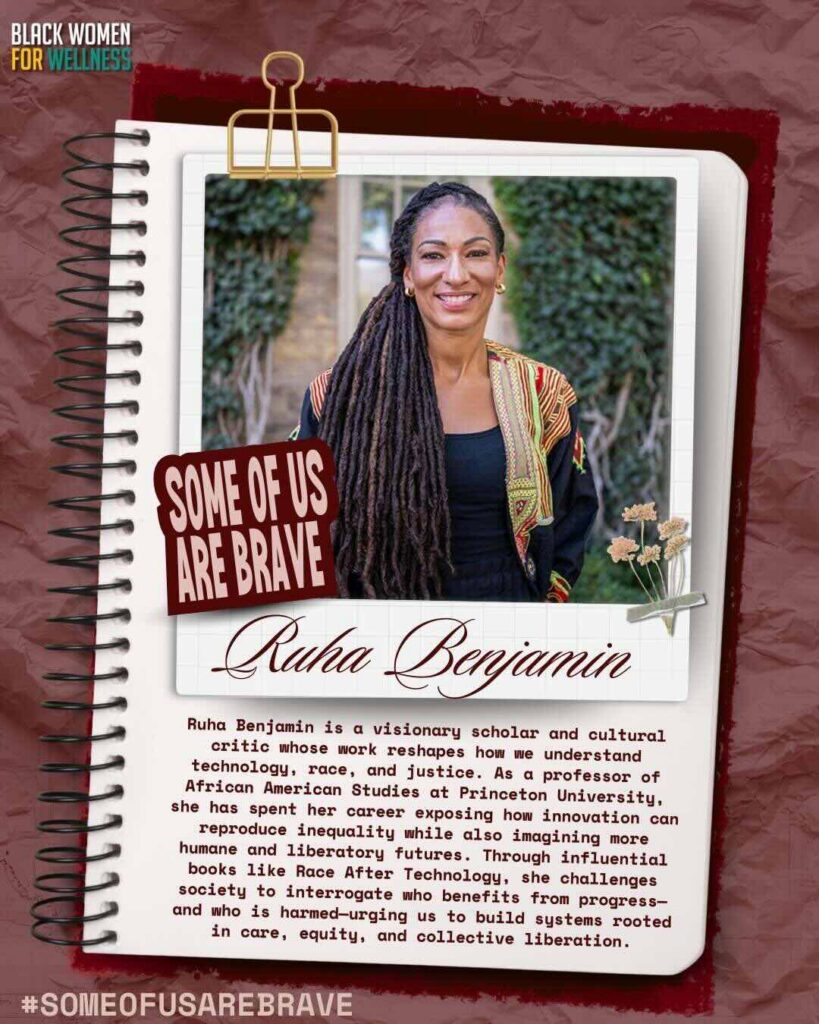
Ruha Benjamin is a visionary scholar and cultural critic whose work reshapes how we understand technology, race, and justice.
As a professor of African American Studies at Princeton University, she has spent her career exposing how innovation can reproduce inequality while also imagining more humane and liberatory futures.
Through influential books like Race After Technology, she challenges society to interrogate who benefits from progress—and who is harmed—urging us to build systems rooted in care, equity, and collective liberation.
“Imagination: A Manifesto”
A call to action arguing that our current world is a product of the “elite imagination,” and that to build a more just society, we must first liberate our collective ability to dream and design beyond the constraints of capitalism and white supremacy.
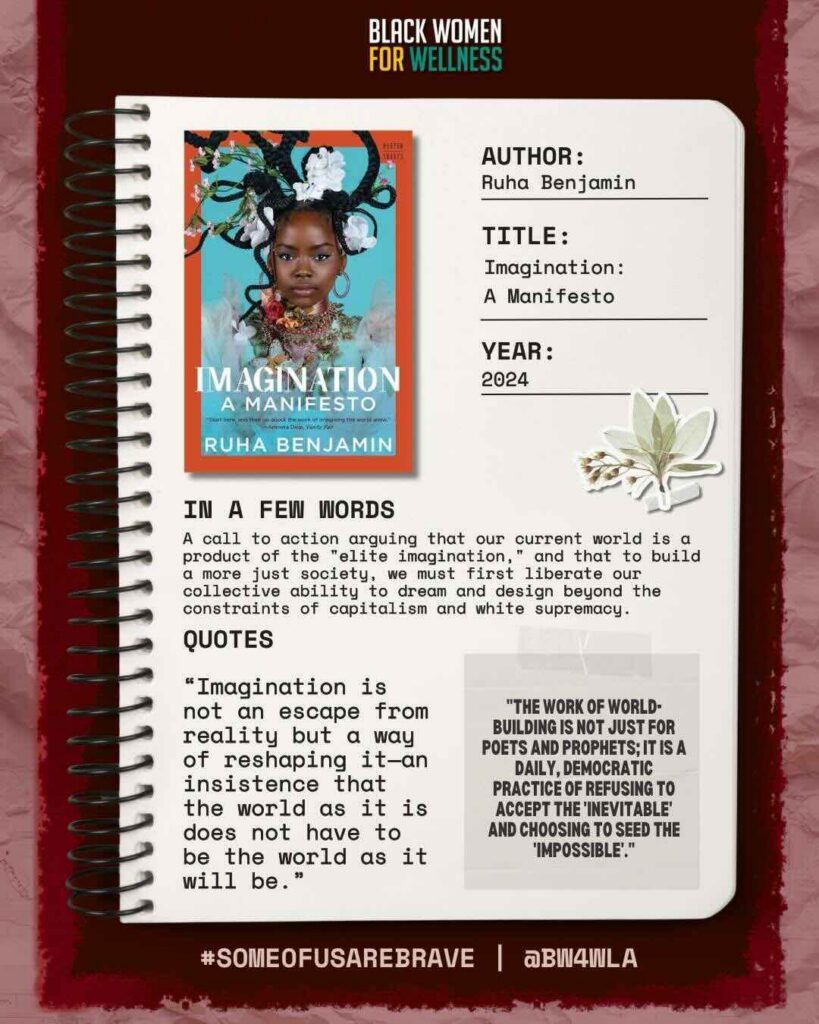
Quote:
“Imagination is not an escape from reality but a way of reshaping it—an insistence that the world as it is does not have to be the world as it will be.”
Brittney Cooper
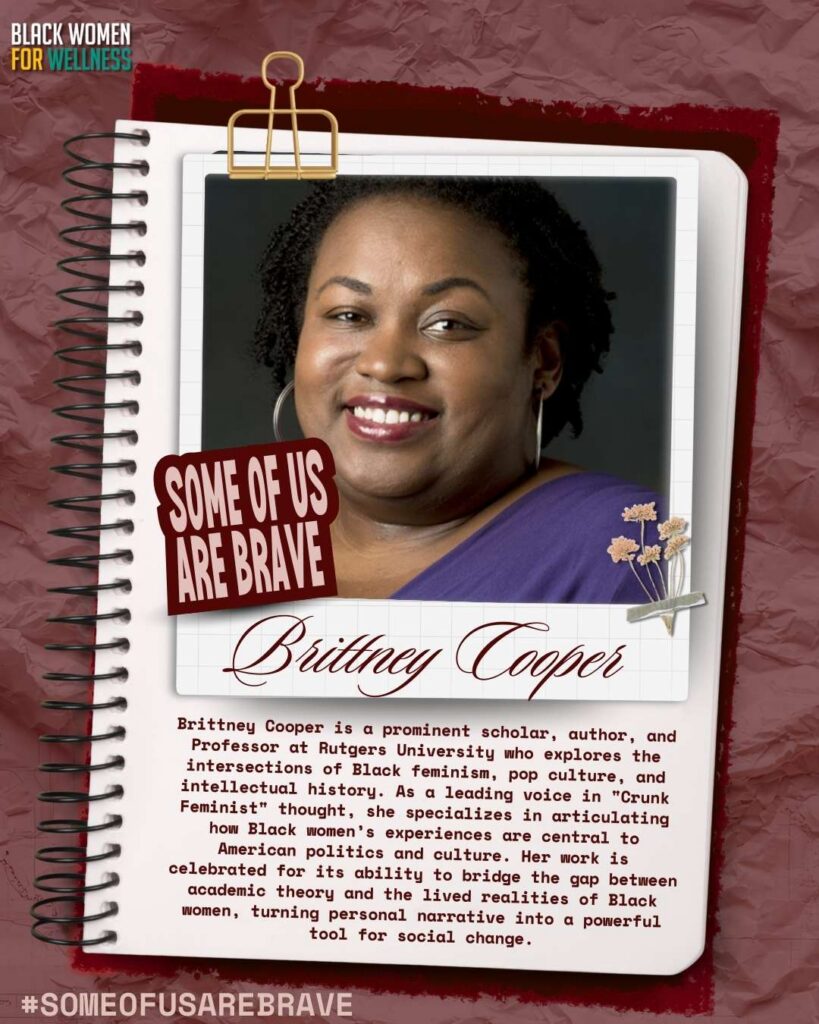
Brittney Cooper is a prominent scholar, author, and Professor at Rutgers University who explores the intersections of Black feminism, pop culture, and intellectual history.
As a leading voice in “Crunk Feminist” thought, she specializes in articulating how Black women’s experiences are central to American politics and culture.
Her work is celebrated for its ability to bridge the gap between academic theory and the lived realities of Black women, turning personal narrative into a powerful tool for social change.
“Eloquent Rage”
A transformative memoir and cultural critique that reframes “Black women’s anger” not as a stereotype to be feared, but as a legitimate, productive force for dismantling patriarchy and white supremacy.
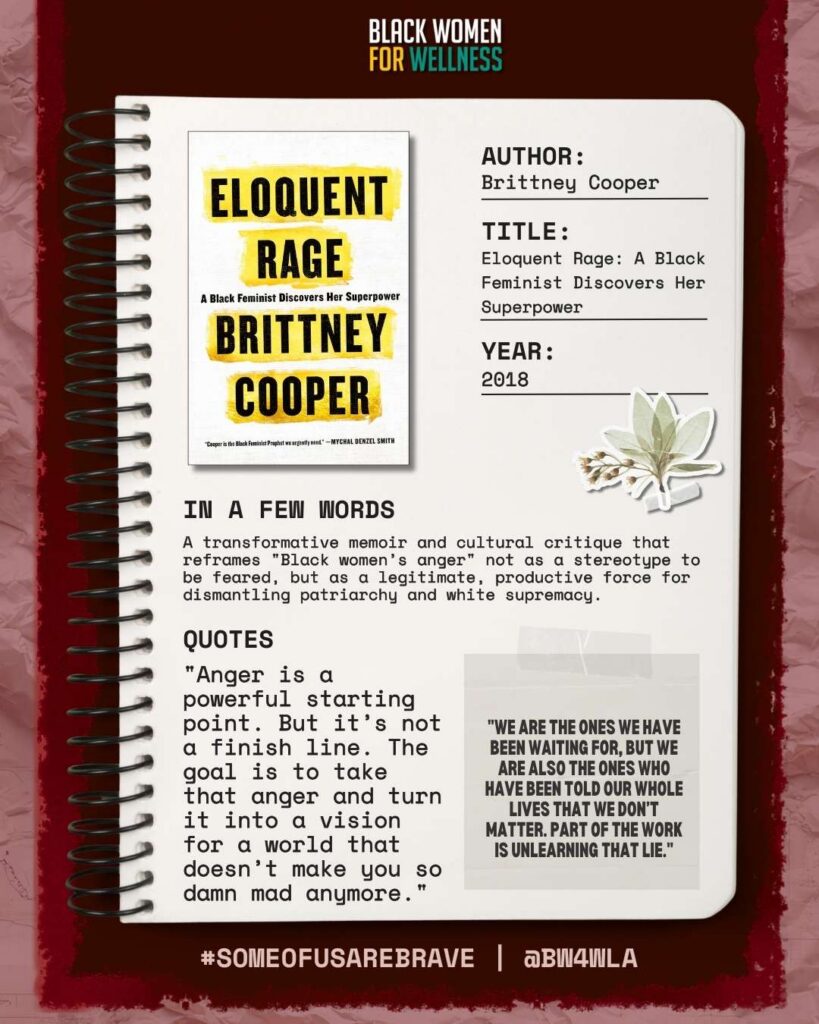
Quote:
“Anger is a powerful starting point. But it’s not a finish line. The goal is to take that anger and turn it into a vision for a world that doesn’t make you so damn mad anymore.”
Patrica Hill Collins
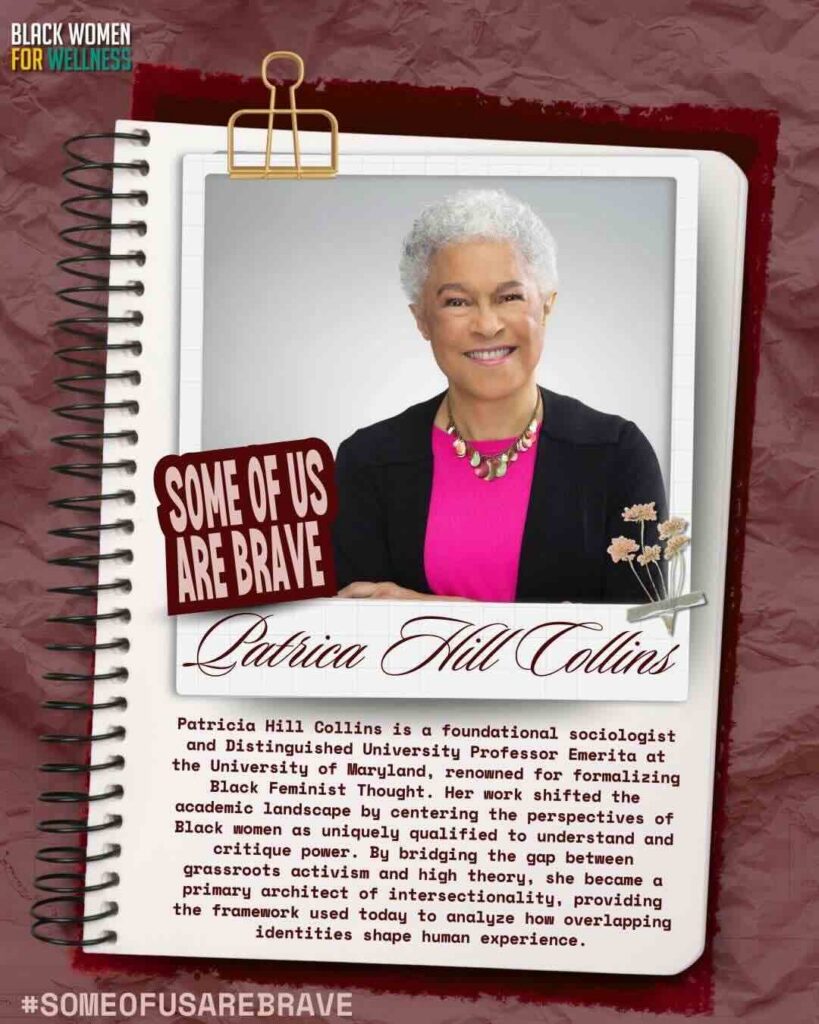
Patricia Hill Collins is a foundational sociologist and Distinguished University Professor Emerita at the University of Maryland, renowned for formalizing Black Feminist Thought.
Her work shifted the academic landscape by centering the perspectives of Black women as uniquely qualified to understand and critique power.
By bridging the gap between grassroots activism and high theory, she became a primary architect of intersectionality, providing the framework used today to analyze how overlapping identities shape human experience.
“Black Feminist Thought”
A landmark text that defines Black feminism as a distinct “subjugated knowledge,” outlining how Black women resist a “matrix of domination” by synthesizing their lived experiences into a powerful collective standpoint.
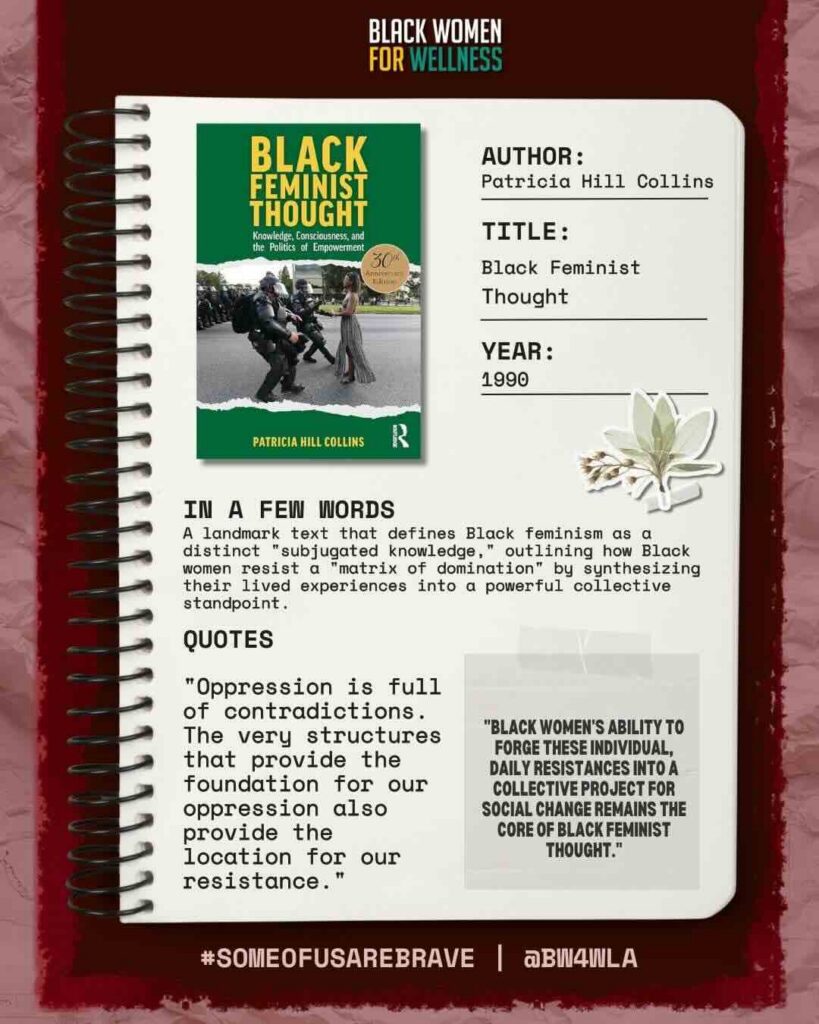
Quote:
“Oppression is full of contradictions. The very structures that provide the foundation for our oppression also provide the location for our resistance.”
Mikki Kendall
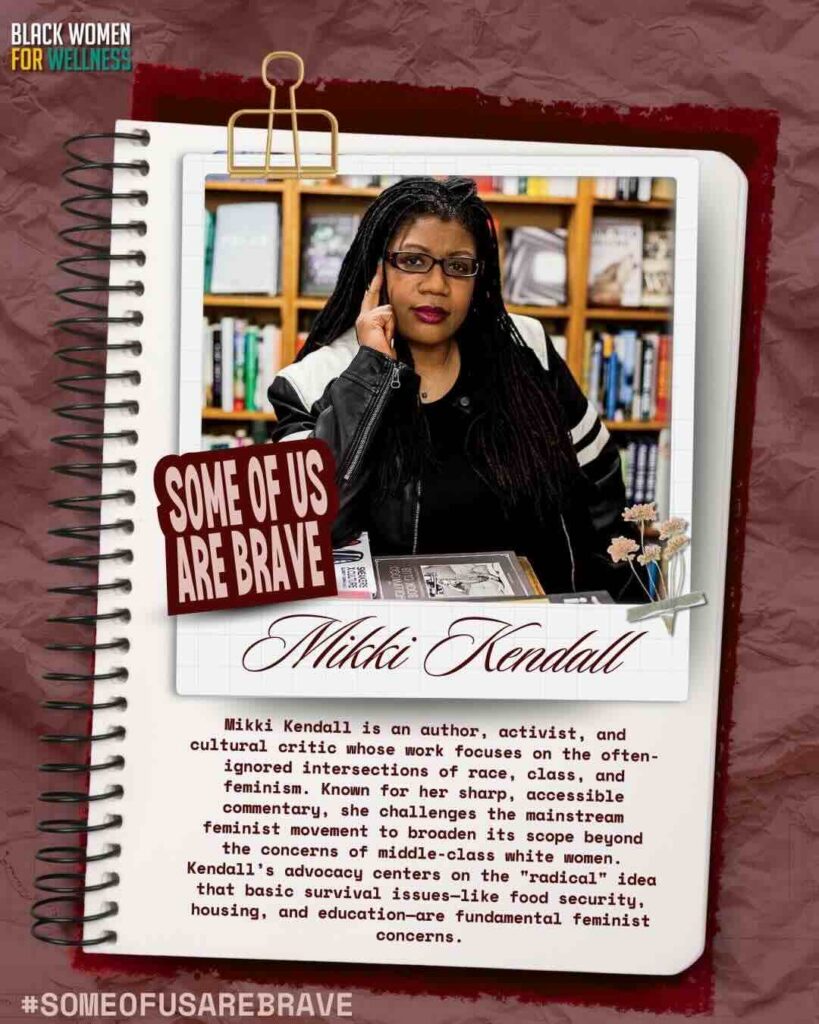
Mikki Kendall is an author, activist, and cultural critic whose work focuses on the often-ignored intersections of race, class, and feminism.
Known for her sharp, accessible commentary, she challenges the mainstream feminist movement to broaden its scope beyond the concerns of middle-class white women.
Kendall’s advocacy centers on the “radical” idea that basic survival issues—like food security, housing, and education—are fundamental feminist concerns.
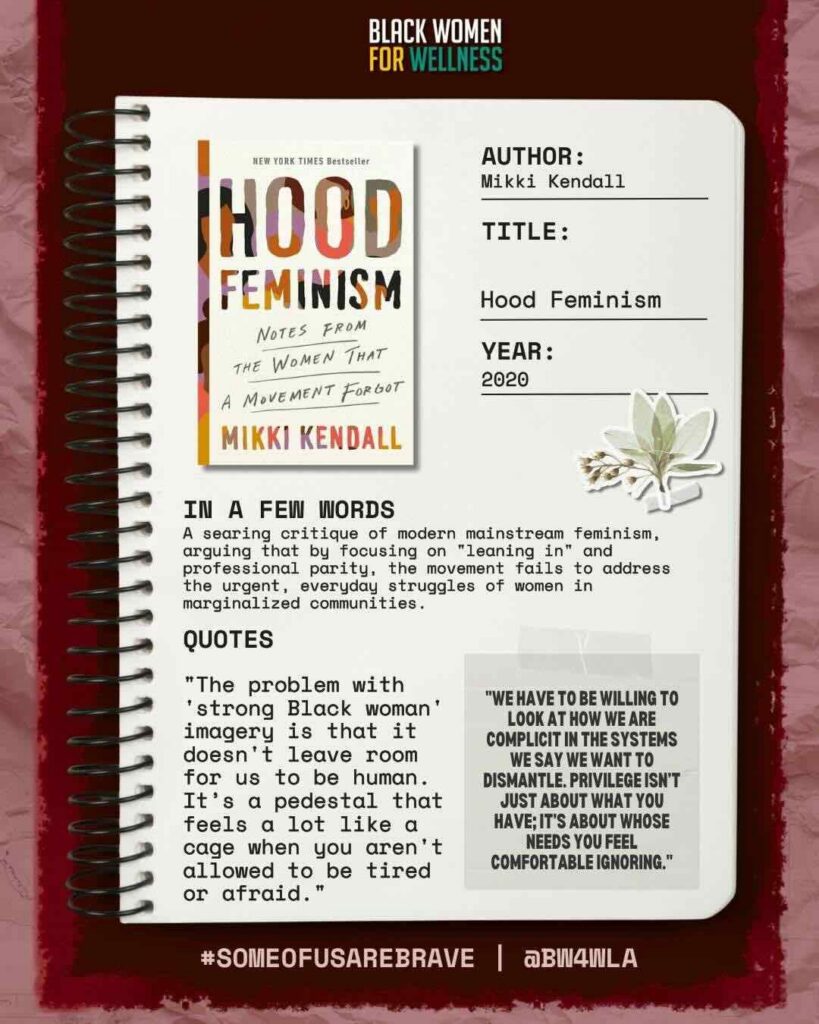
“Hood Feminism”
A searing critique of modern mainstream feminism, arguing that by focusing on “leaning in” and professional parity, the movement fails to address the urgent, everyday struggles of women in marginalized communities.
Quote:
“The problem with ‘strong Black woman’ imagery is that it doesn’t leave room for us to be human. It’s a pedestal that feels a lot like a cage when you aren’t allowed to be tired or afraid.”
Tarana Burke
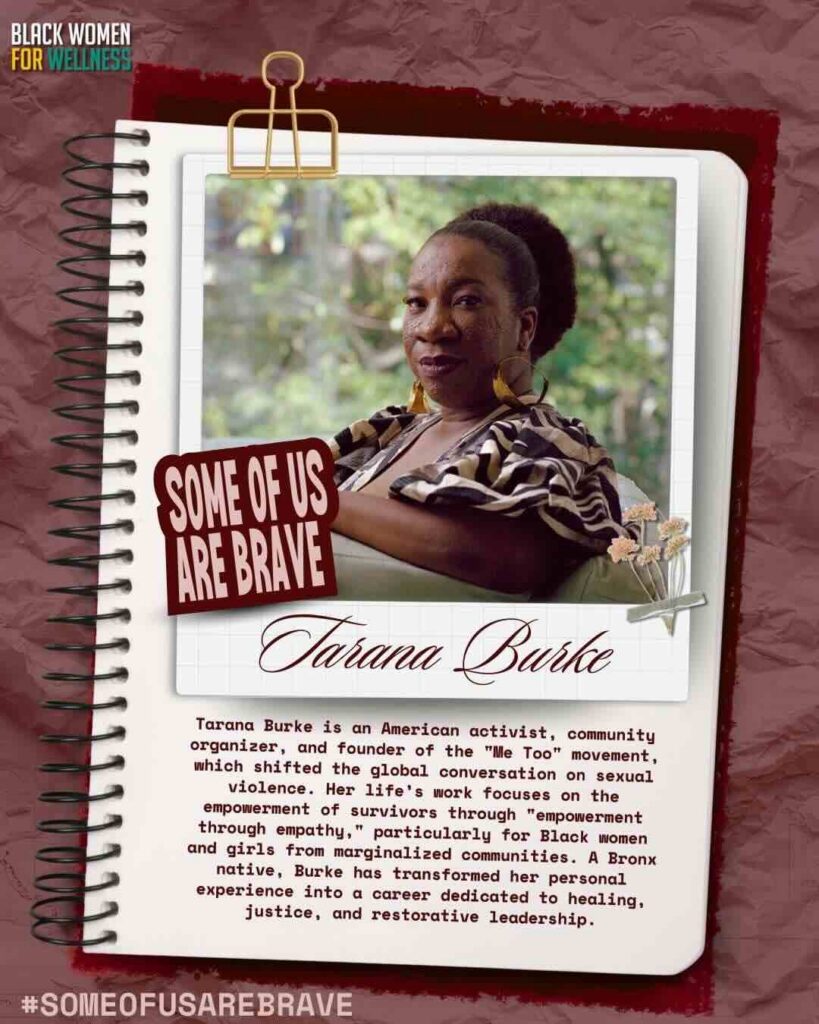
Tarana Burke is an American activist, community organizer, and founder of the “Me Too” movement, which shifted the global conversation on sexual violence.
Her life’s work focuses on the empowerment of survivors through “empowerment through empathy,” particularly for Black women and girls from marginalized communities.
A Bronx native, Burke has transformed her personal experience into a career dedicated to healing, justice, and restorative leadership.
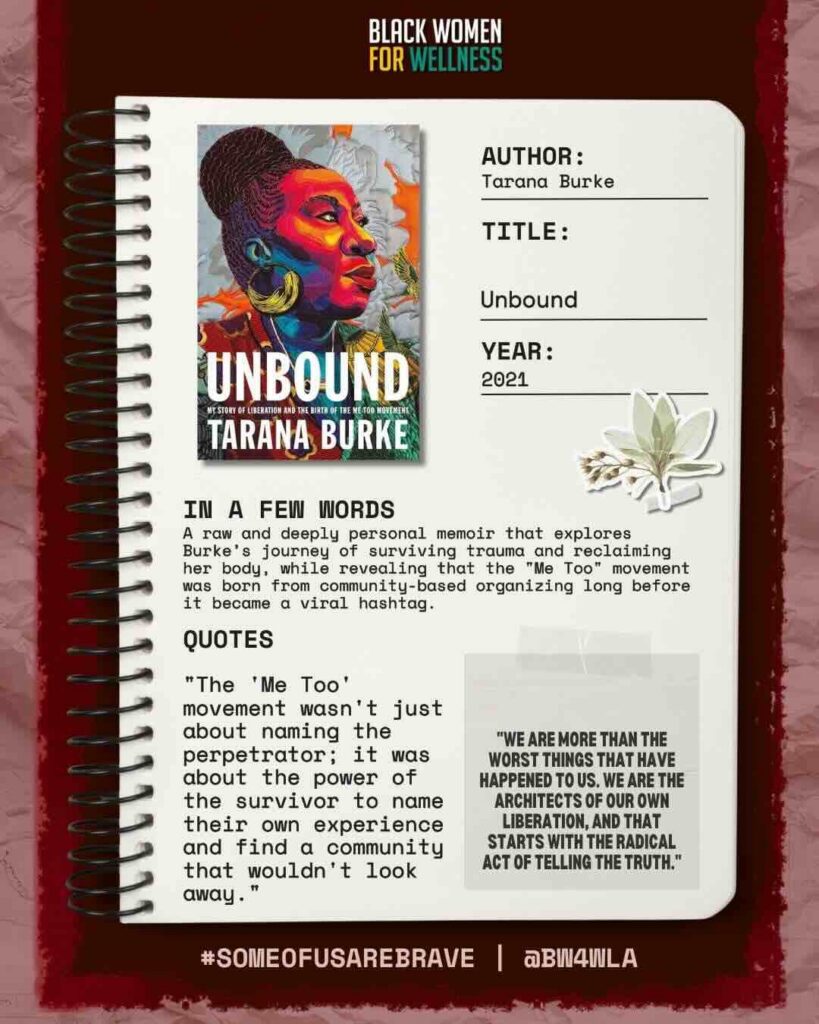
“Unbound”
A raw and deeply personal memoir that explores Burke’s journey of surviving trauma and reclaiming her body, while revealing that the “Me Too” movement was born from community-based organizing long before it became a viral hashtag.
Quote:
“The ‘Me Too’ movement wasn’t just about naming the perpetrator; it was about the power of the survivor to name their own experience and find a community that wouldn’t look away.”
Linda Villarosa
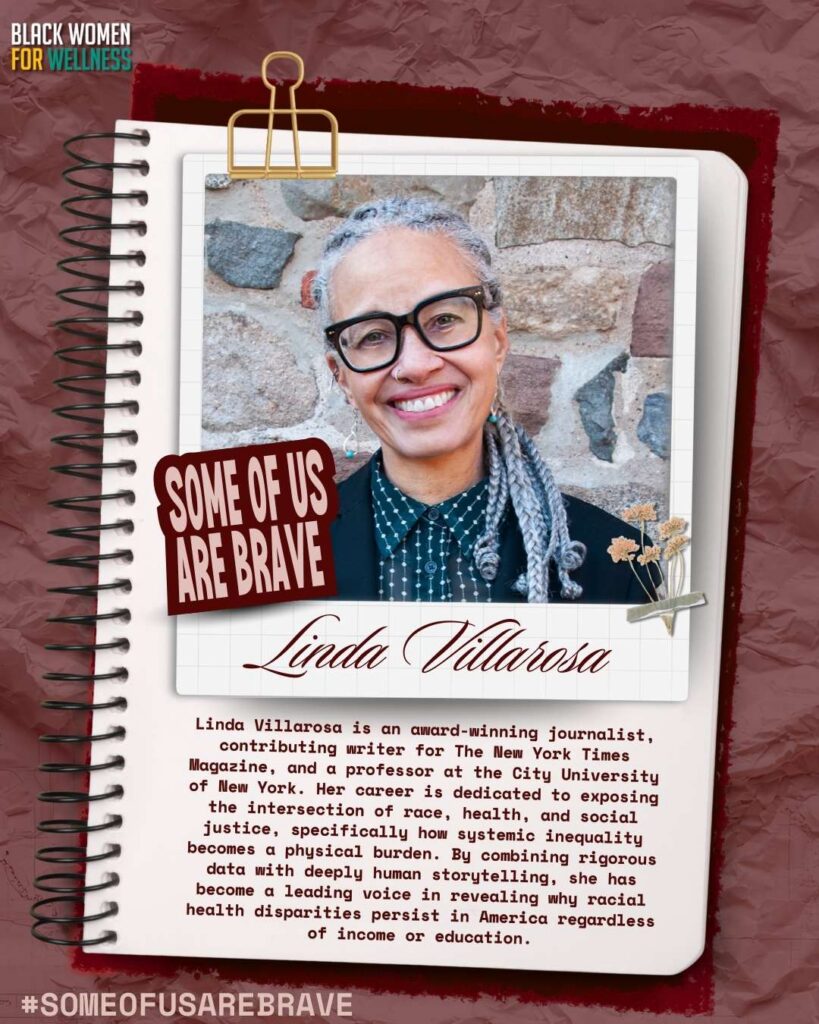
Linda Villarosa is an award-winning journalist, contributing writer for The New York Times Magazine, and a professor at the City University of New York.
Her career is dedicated to exposing the intersection of race, health, and social justice, specifically how systemic inequality becomes a physical burden.
By combining rigorous data with deeply human storytelling, she has become a leading voice in revealing why racial health disparities persist in America regardless of income or education.
“Under the Skin”
A groundbreaking investigation that argues it is not “race” or genetics that makes Black people sicker, but the weathering effect of systemic racism and medical bias that physically enters the body and causes premature aging and death.

Quotes:
“The problem is not race; the problem is racism. When we treat race as a risk factor, we overlook the actual risk factor: the lived experience of being Black in a society that is hostile to Blackness.”
Candice Marie Benbow

Candice Marie Benbow is a theologian, essayist, and creator who works at the intersection of faith, feminism, and Black culture.
She is a leading voice in “Red Lip Theology,” a movement that encourages Black women to embrace their full selves—spirituality, sexuality, and agency—without shame.
By centering the lived experiences of Black women, Benbow challenges traditional church structures to move toward a more inclusive and liberating theology.
“Red Lip Theology”
A soulful and sharp collection of essays that bridges the gap between the pews and the world, arguing that Black womanhood is sacred and that true faith should celebrate, rather than suppress, a woman’s desire and autonomy.
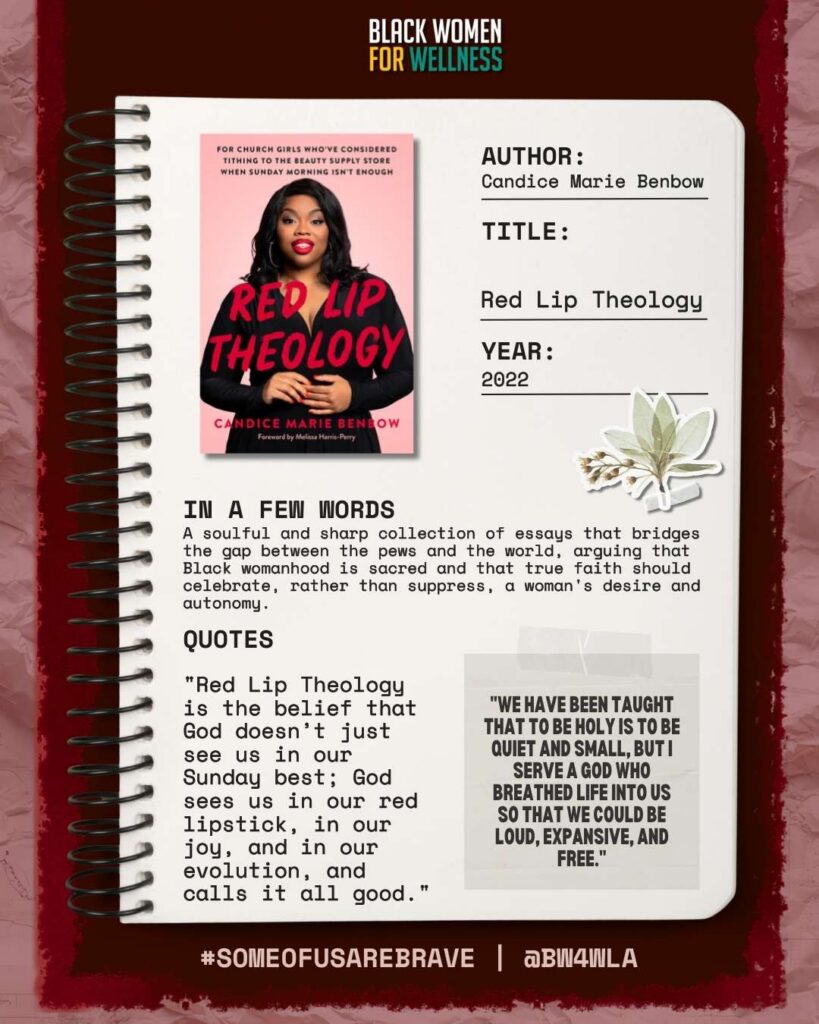
Quote:
“Red Lip Theology is the belief that God doesn’t just see us in our Sunday best; God sees us in our red lipstick, in our joy, and in our evolution, and calls it all good.”
Austin Channing Brown
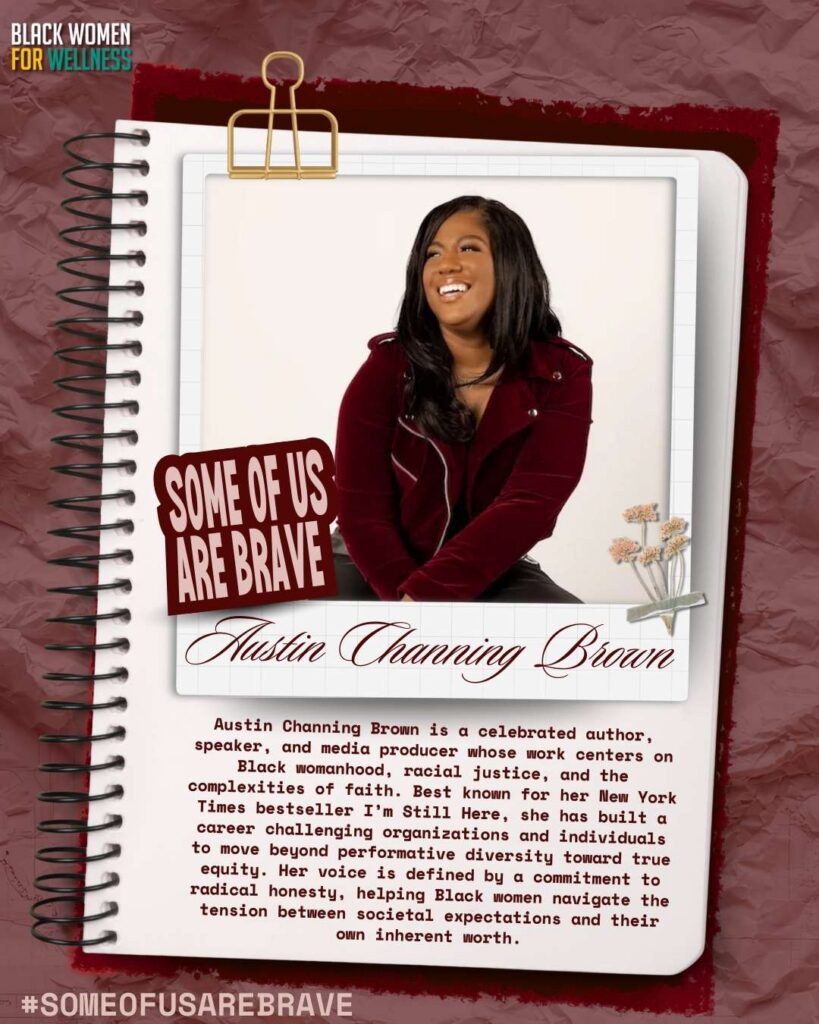
Austin Channing Brown is a celebrated author, speaker, and media producer whose work centers on Black womanhood, racial justice, and the complexities of faith.
Best known for her New York Times bestseller I’m Still Here, she has built a career challenging organizations and individuals to move beyond performative diversity toward true equity.
Her voice is defined by a commitment to radical honesty, helping Black women navigate the tension between societal expectations and their own inherent worth.
“Full of Myself: Black Womanhood and the Journey to Self-Possession”
A powerful exploration of reclaiming one’s identity from a world that demands Black women be small, arguing that self-possession is not a luxury but a vital act of resistance and spiritual wholeness.
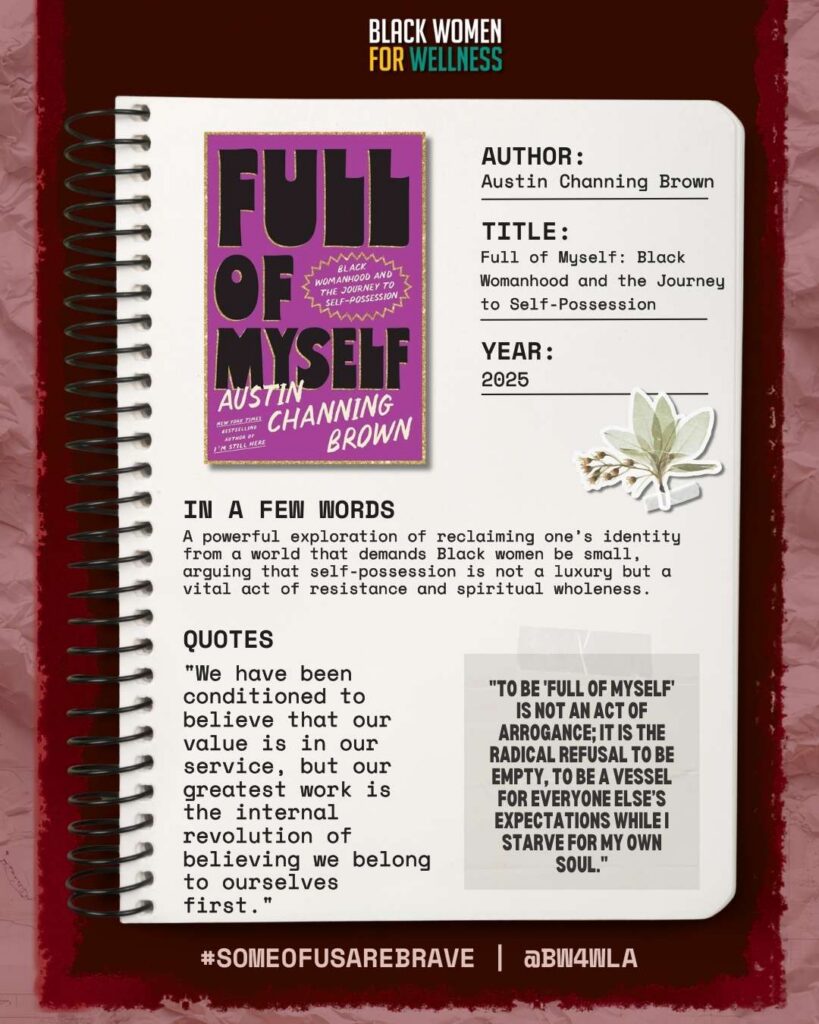
Quote:
“We have been conditioned to believe that our value is in our service, but our greatest work is the internal revolution of believing we belong to ourselves first.”
Tricia Hersey
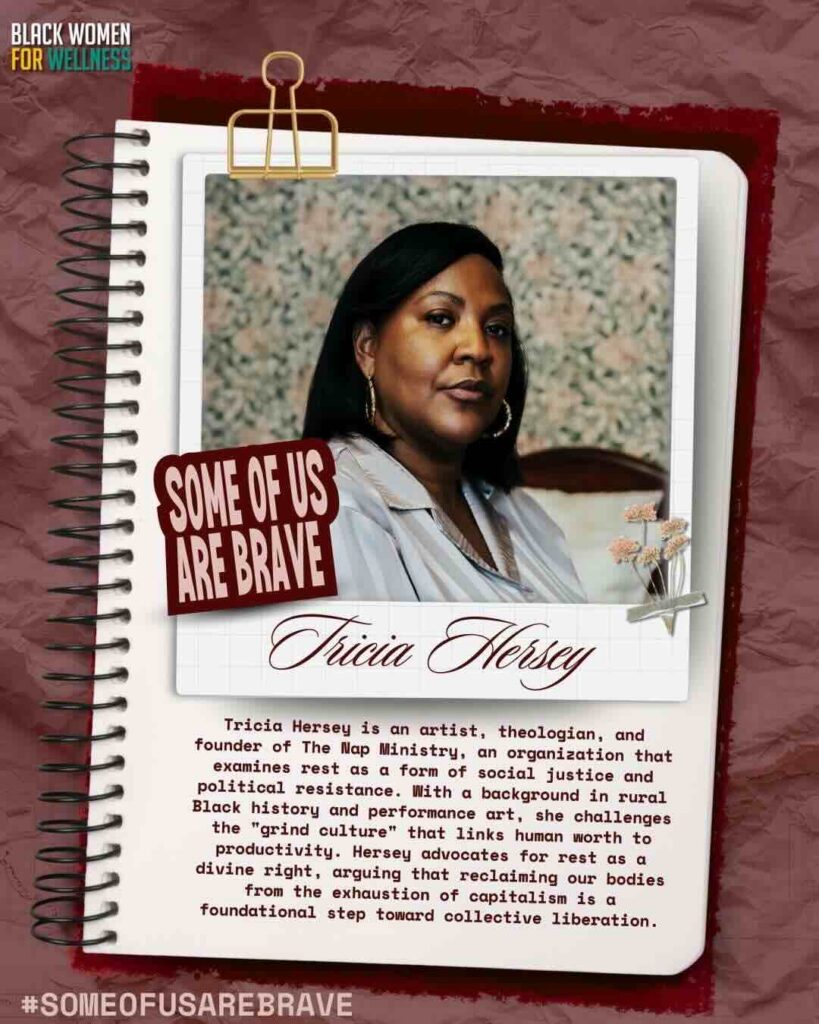
Tricia Hersey is an artist, theologian, and founder of The Nap Ministry, an organization that examines rest as a form of social justice and political resistance.
With a background in rural Black history and performance art, she challenges the “grind culture” that links human worth to productivity.
Hersey advocates for rest as a divine right, arguing that reclaiming our bodies from the exhaustion of capitalism is a foundational step toward collective liberation.
Rest Is Resistance: A Manifesto
A transformative call to reject the “grind culture” of white supremacy and capitalism, framing sleep and imagination as essential tools for healing and subverting a system that views marginalized bodies as mere machines.
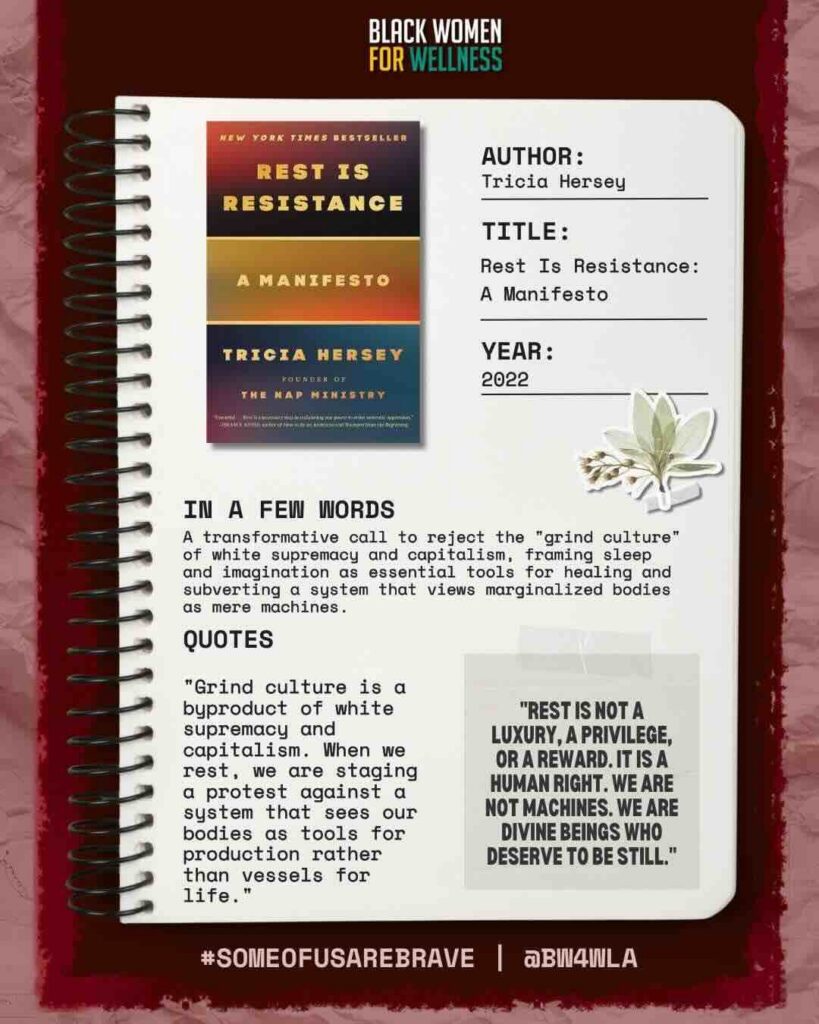
Quote:
“Grind culture is a byproduct of white supremacy and capitalism. When we rest, we are staging a protest against a system that sees our bodies as tools for production rather than vessels for life.”
Sonya Renee Taylor
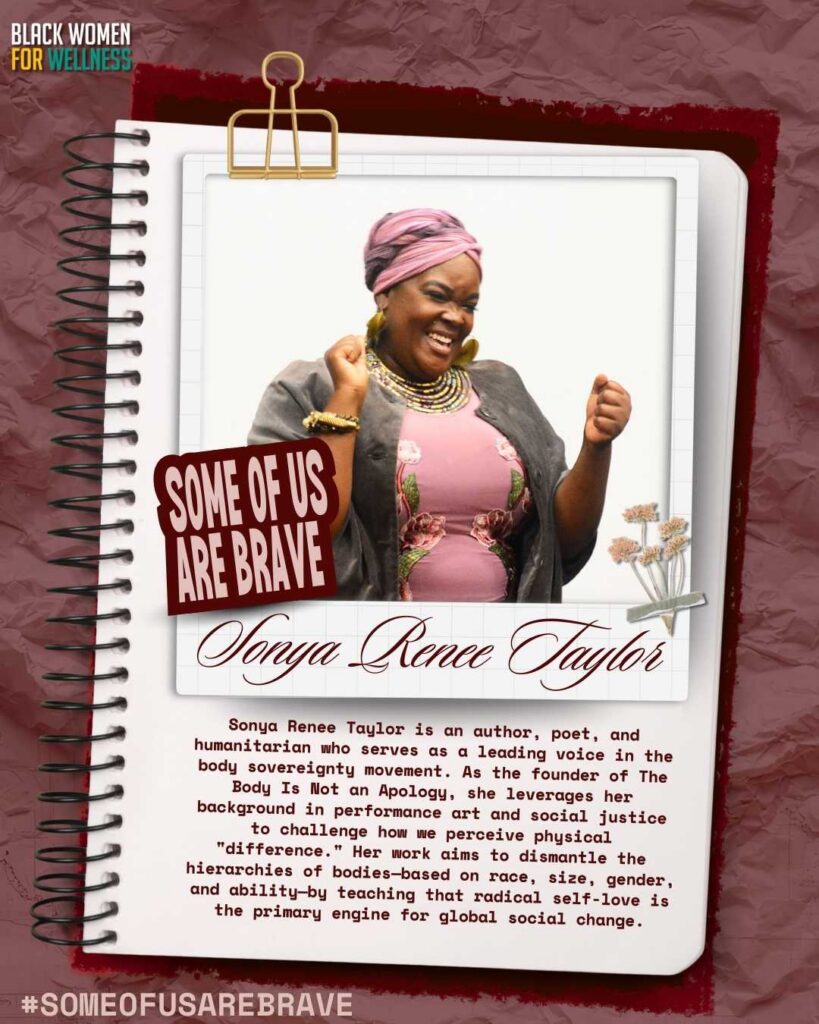
Sonya Renee Taylor is an author, poet, and humanitarian who serves as a leading voice in the body sovereignty movement.
As the founder of The Body Is Not an Apology, she leverages her background in performance art and social justice to challenge how we perceive physical “difference.”
Her work aims to dismantle the hierarchies of bodies—based on race, size, gender, and ability—by teaching that radical self-love is the primary engine for global social change.
The Body Is Not an Apology
A revolutionary guide that introduces radical self-love as the antidote to “body terrorism,” arguing that when we stop apologizing for our physical existence, we break the systems of oppression that rely on us feeling ashamed.

Quote:
“We are not born hating our bodies. We are taught to. And anything that can be taught can be unlearned. Our bodies are not problems to be solved; they are the homes we live in.”
Thema Bryant
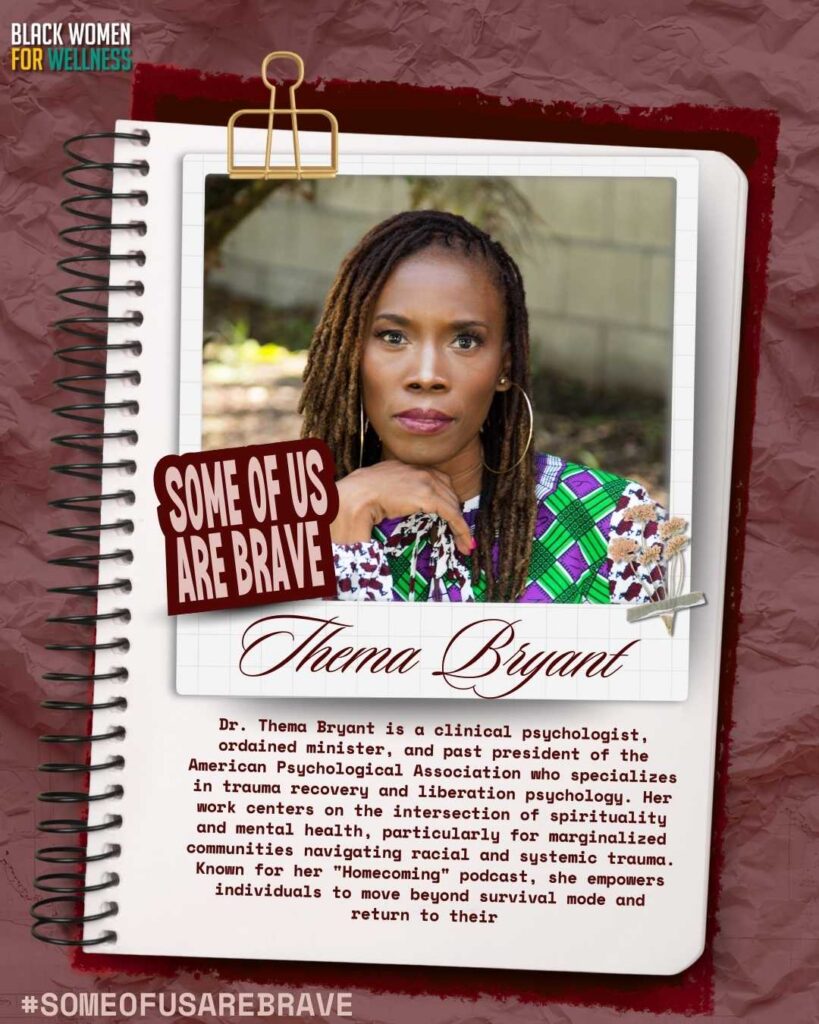
Dr. Thema Bryant is a clinical psychologist, ordained minister, and past president of the American Psychological Association who specializes in trauma recovery and liberation psychology. Her work centers on the intersection of spirituality and mental health, particularly for marginalized communities navigating racial and systemic trauma. Known for her “Homecoming” podcast, she empowers individuals to move beyond survival mode and return to their
homecoming
A compassionate roadmap for survivors of trauma—ranging from personal abuse to systemic racism—that provides tools to stop living in “exile” and begin the sacred journey of reconnecting with one’s body, mind, and spirit.
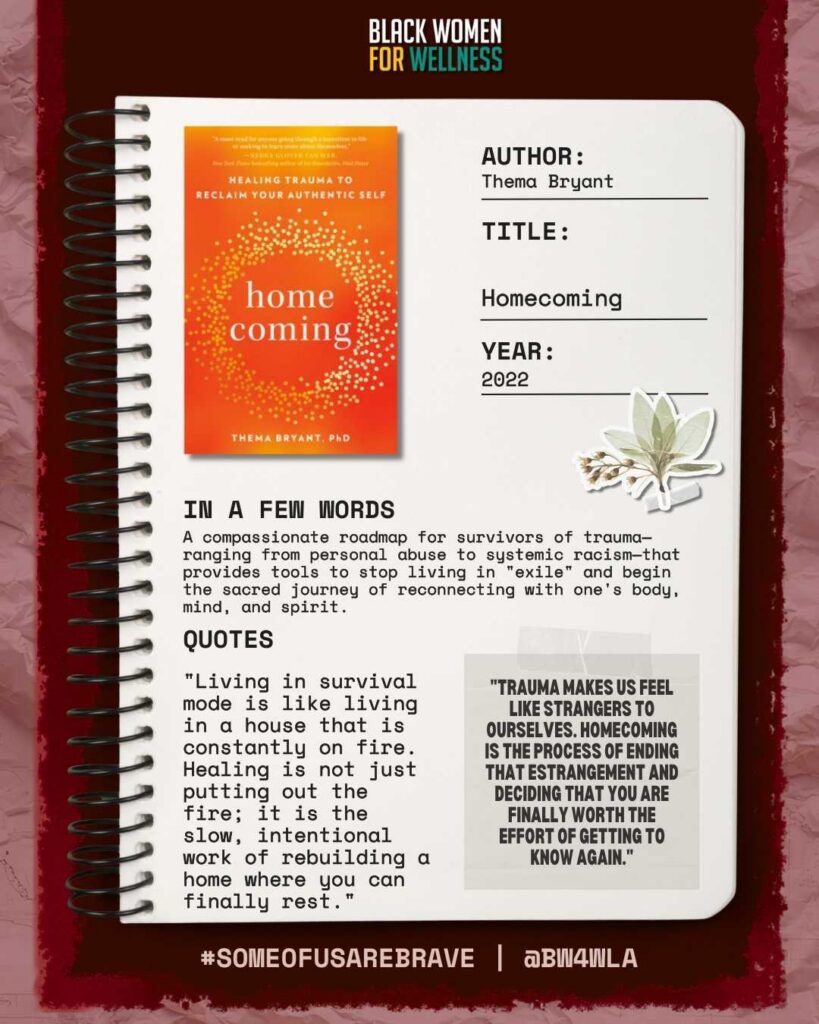
Quote:
“Living in survival mode is like living in a house that is constantly on fire. Healing is not just putting out the fire; it is the slow, intentional work of rebuilding a home where you can finally rest.”
Dána-Ain Davis

Dána-Ain Davis is a distinguished professor of anthropology and Director of the Center for the Study of Women and Society at the CUNY Graduate Center. Her work sits at the intersection of medical anthropology, Black studies, and reproductive rights, with a specific focus on how structural racism shapes the lives of Black women. She is a pivotal researcher in documenting the “medical racism” that persists in obstetric care, advocating for a transformation in how the American healthcare system treats Black motherhood.
Reproductive Injustice: Racism, Pregnancy, and Premature Birth
A harrowing and essential ethnographic study that reveals how medical racism—not class or lifestyle—drives the disproportionately high rates of premature births among Black women, regardless of their socioeconomic status.
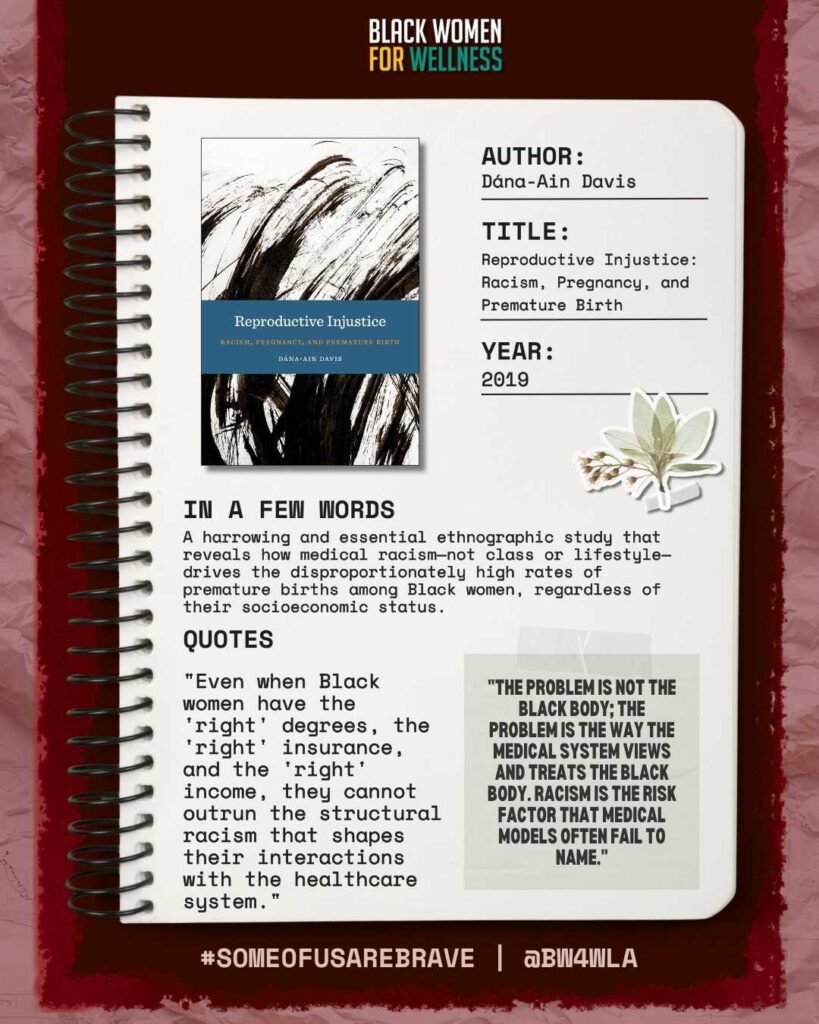
Quote:
“Even when Black women have the ‘right’ degrees, the ‘right’ insurance, and the ‘right’ income, they cannot outrun the structural racism that shapes their interactions with the healthcare system.”
bell hooks

Gloria Jean Watkins, better known by her lowercase pen name bell hooks, was a prolific cultural critic, feminist theorist, and trailblazing intellectual. Her work is legendary for making complex academic concepts accessible, centering the lived experiences of Black women while exploring the intersection of “imperialist white-supremacist capitalist patriarchy.” Throughout her career, she remained a steadfast advocate for the transformative power of love as a political act and a tool for social change.
Ain’t I a Woman: Black Women and Feminism
A foundational text that examines the historical impact of sexism on Black women during slavery and the suffrage movement, arguing that mainstream feminism is inherently flawed when it ignores the simultaneity of racism and sexism.
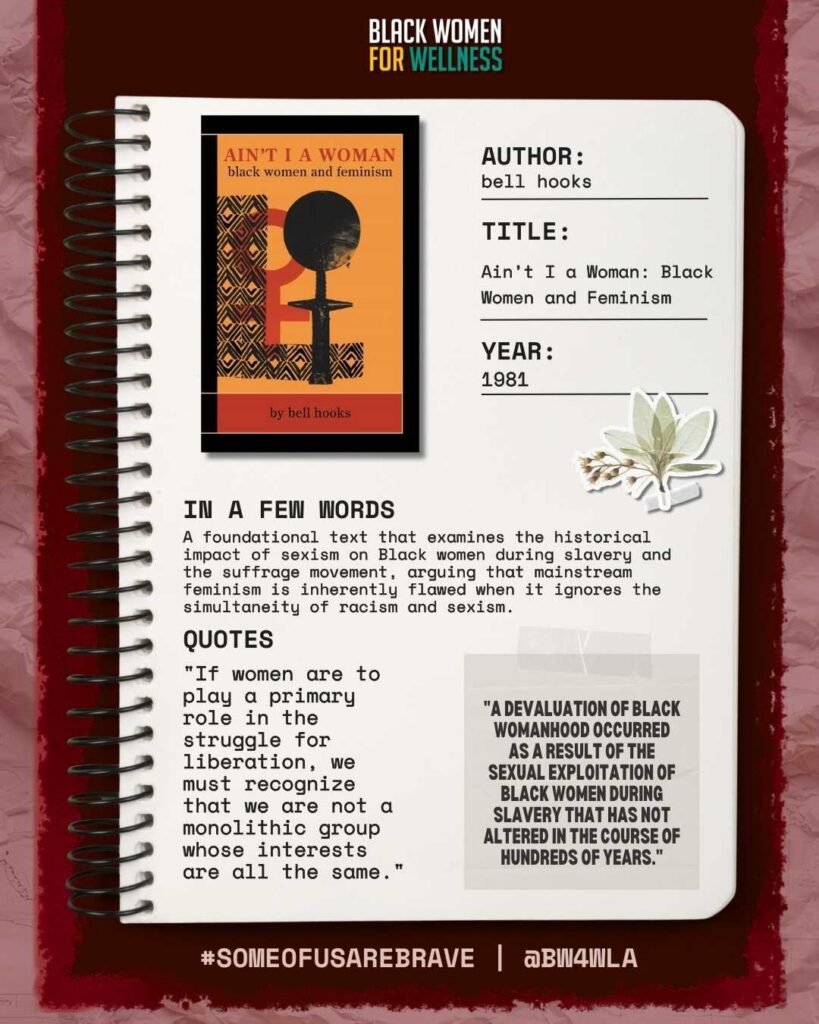
Quote:
“If women are to play a primary role in the struggle for liberation, we must recognize that we are not a monolithic group whose interests are all the same.”
Audre Lorde
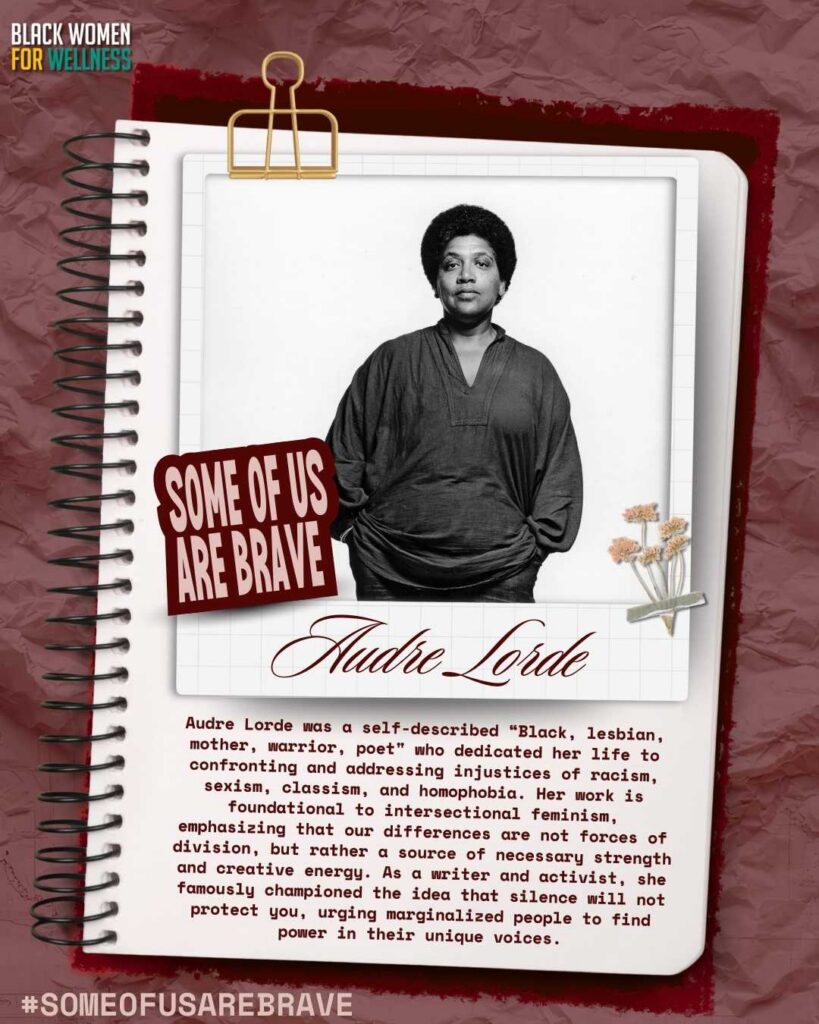
Audre Lorde was a self-described “Black, lesbian, mother, warrior, poet” who dedicated her life to confronting and addressing injustices of racism, sexism, classism, and homophobia. Her work is foundational to intersectional feminism, emphasizing that our differences are not forces of division, but rather a source of necessary strength and creative energy. As a writer and activist, she famously championed the idea that silence will not protect you, urging marginalized people to find power in their unique voices.
Sister Outsider: Essays and Speeches
A definitive collection of fifteen essays and speeches that explores the complexities of identity and the necessity of using difference as a tool for revolution rather than a reason for separation.
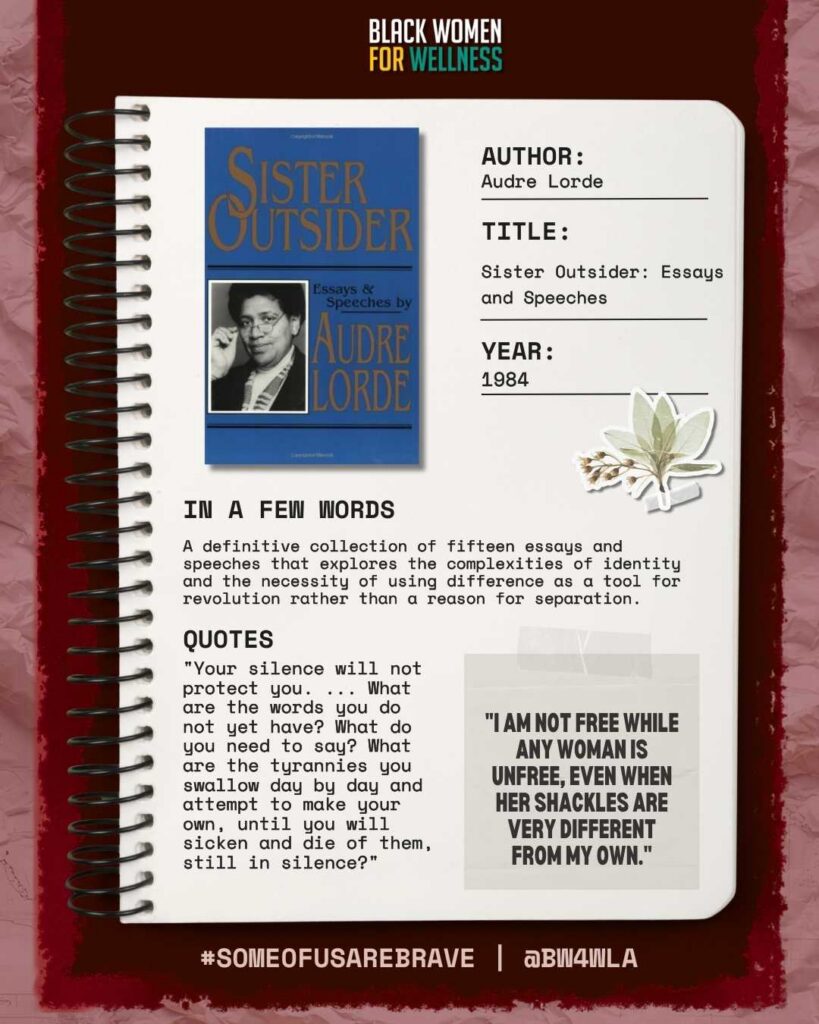
Quote:
“Your silence will not protect you. … What are the words you do not yet have? What do you need to say? What are the tyrannies you swallow day by day and attempt to make your own, until you will sicken and die of them, still in silence?”
Alice Walker
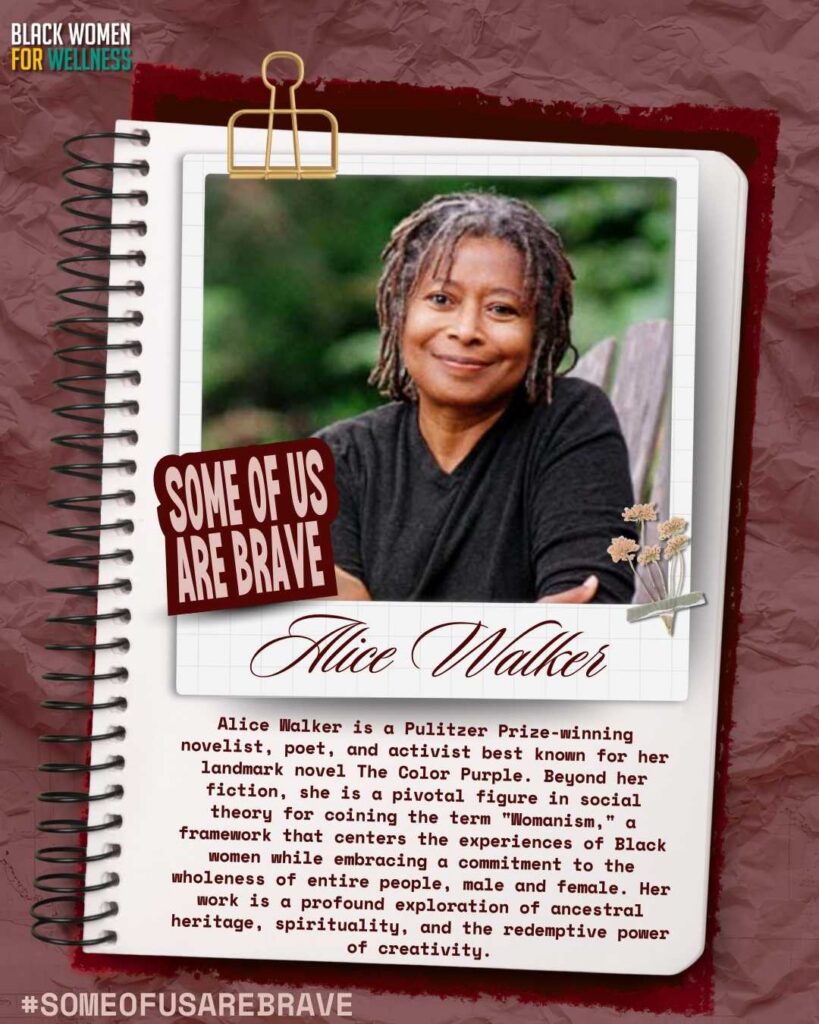
Alice Walker is a Pulitzer Prize-winning novelist, poet, and activist best known for her landmark novel The Color Purple. Beyond her fiction, she is a pivotal figure in social theory for coining the term “Womanism,” a framework that centers the experiences of Black women while embracing a commitment to the wholeness of entire people, male and female. Her work is a profound exploration of ancestral heritage, spirituality, and the redemptive power of creativity.
In Search of Our Mothers’ Gardens: Womanist Prose
A foundational collection of essays that explores the “Womanist” tradition, tracing the suppressed creativity of Black women through generations and arguing that their artistic genius survived through everyday acts like gardening and quilting.

Quote:
“And so our mothers and grandmothers have, more often than not anonymously, handed on the creative spark, the seed of the flower they themselves never hoped to see: or like a sealed letter they could not plainly read.”
Tressie McMillan Cottom
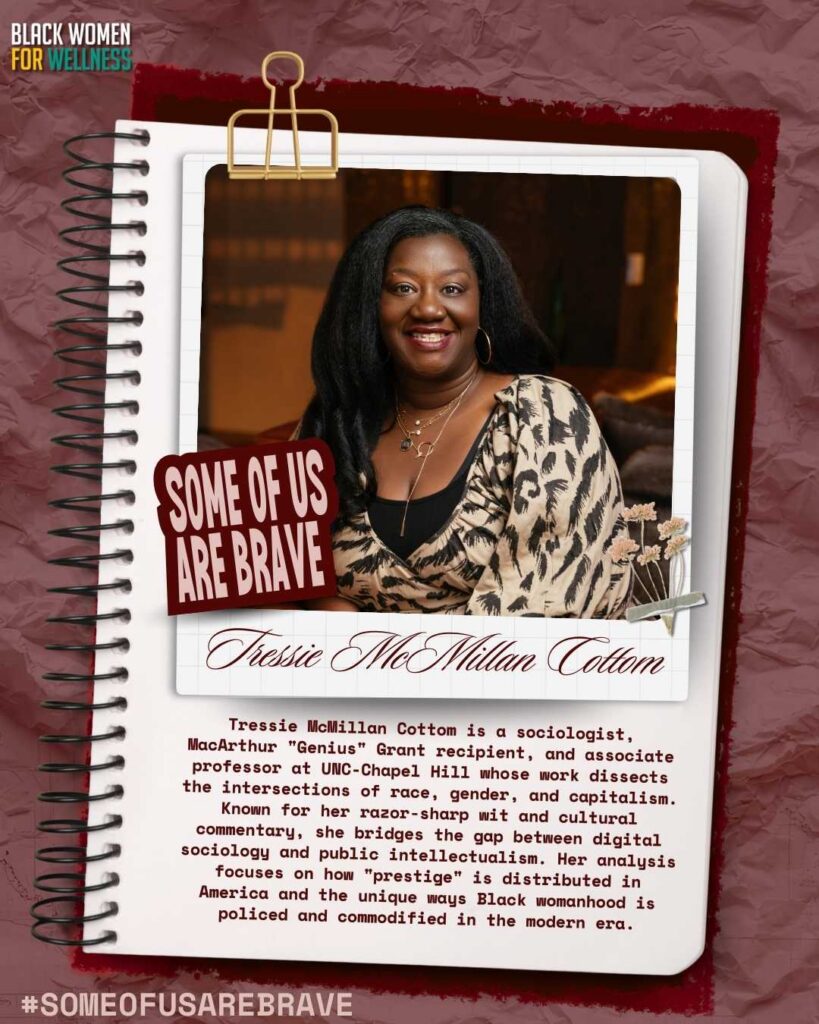
Tressie McMillan Cottom is a sociologist, MacArthur “Genius” Grant recipient, and associate professor at UNC-Chapel Hill whose work dissects the intersections of race, gender, and capitalism. Known for her razor-sharp wit and cultural commentary, she bridges the gap between digital sociology and public intellectualism. Her analysis focuses on how “prestige” is distributed in America and the unique ways Black womanhood is policed and commodified in the modern era.
Thick: And Other Essays
A collection of brilliant, “thick” social critiques that weave personal narrative with rigorous sociology to explain why Black women’s lives are excessively visible yet chronically misunderstood in American culture.
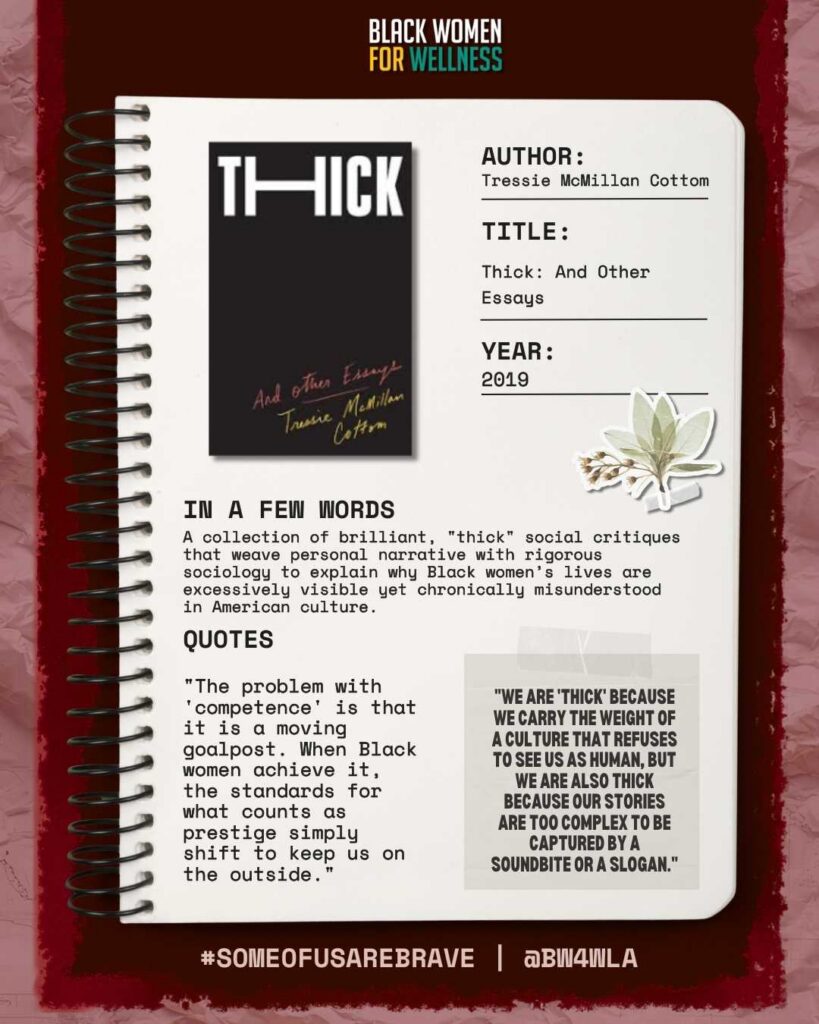
Quote:
“The problem with ‘competence’ is that it is a moving goalpost. When Black women achieve it, the standards for what counts as prestige simply shift to keep us on the outside.”
Toni Morrison
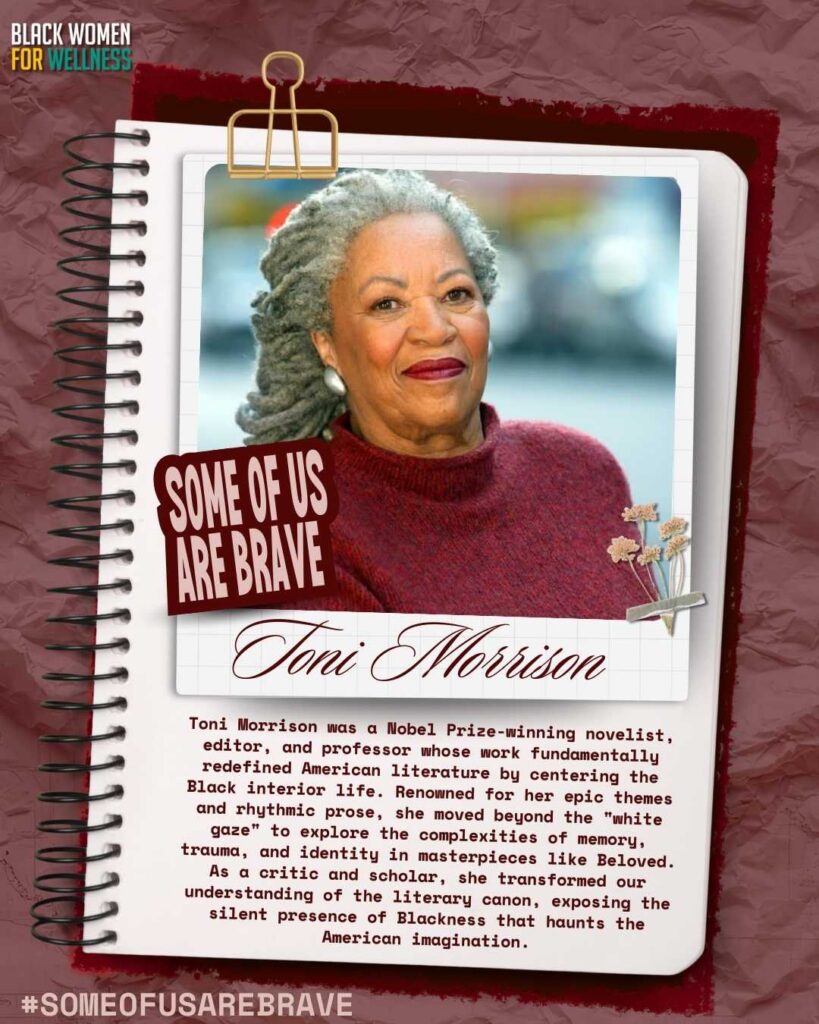
Toni Morrison was a Nobel Prize-winning novelist, editor, and professor whose work fundamentally redefined American literature by centering the Black interior life. Renowned for her epic themes and rhythmic prose, she moved beyond the “white gaze” to explore the complexities of memory, trauma, and identity in masterpieces like Beloved. As a critic and scholar, she transformed our understanding of the literary canon, exposing the silent presence of Blackness that haunts the American imagination.
Playing in the Dark
A transformative work of literary criticism that reveals how the concept of “Americanness” and white identity in literature was built upon a constructed “Africanist” presence, using Black characters as shadows to define white freedom and virtue.
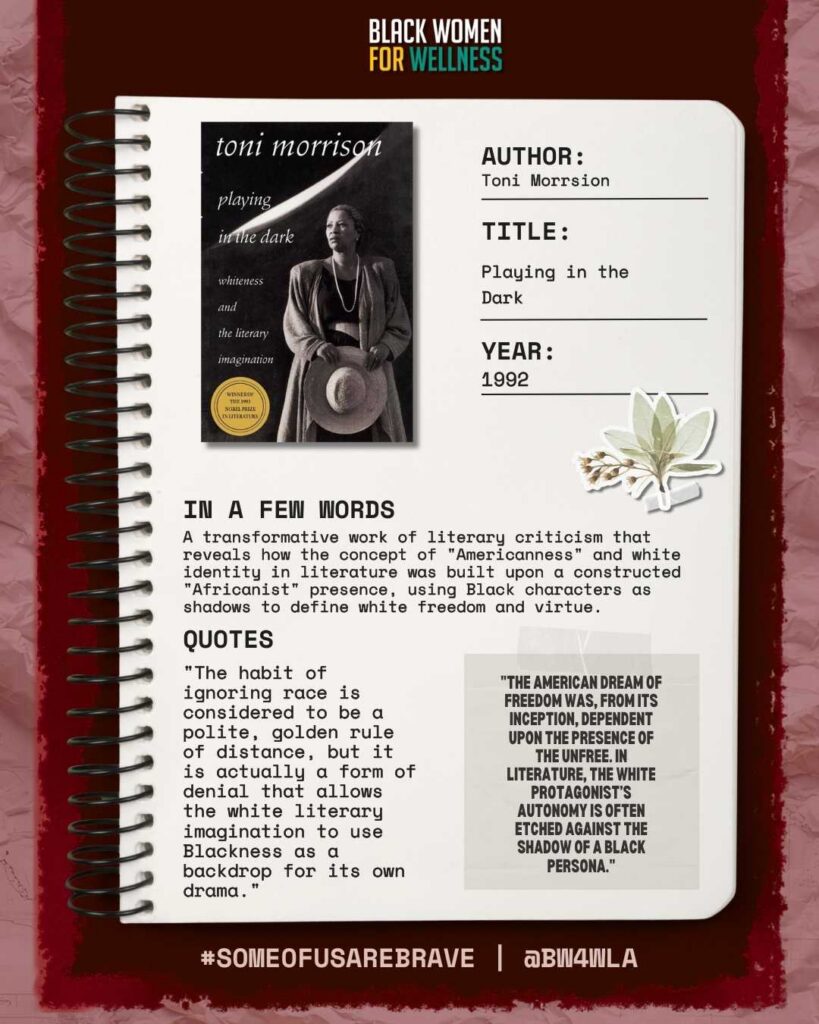
Quote:
“The habit of ignoring race is considered to be a polite, golden rule of distance, but it is actually a form of denial that allows the white literary imagination to use Blackness as a backdrop for its own drama.”
Nikki Giovanni
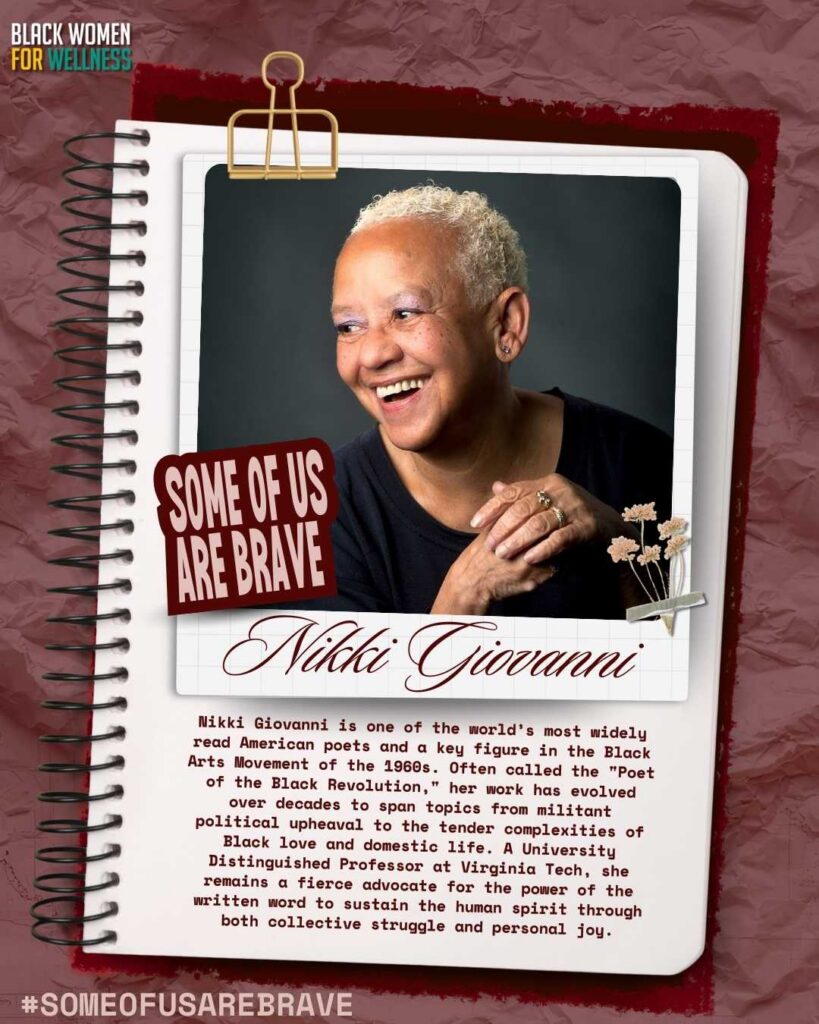
Nikki Giovanni is one of the world’s most widely read American poets and a key figure in the Black Arts Movement of the 1960s. Often called the “Poet of the Black Revolution,” her work has evolved over decades to span topics from militant political upheaval to the tender complexities of Black love and domestic life. A University Distinguished Professor at Virginia Tech, she remains a fierce advocate for the power of the written word to sustain the human spirit through both collective struggle and personal joy.
Make Me Rain: Poems & Prose
A late-career collection that blends the personal with the political, serving as a soulful meditation on heritage, injustice, and the resilience required to find “rain”—or renewal—in a world that is often parched by systemic hate.
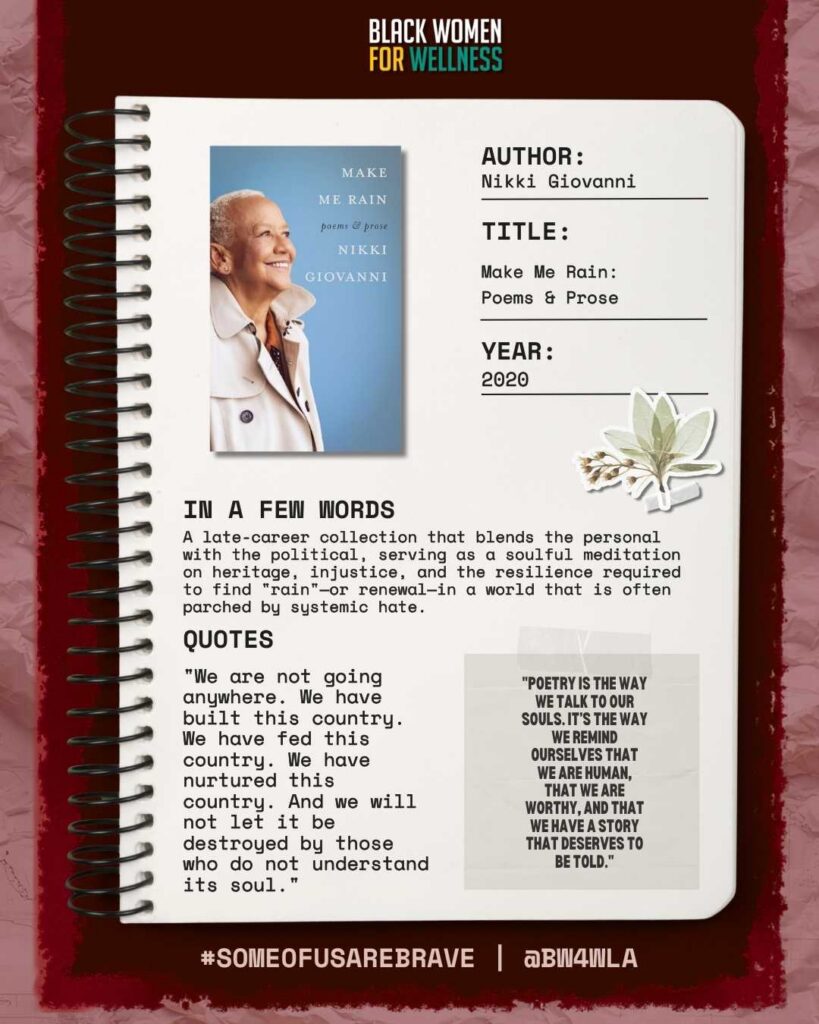
Quote:
“We are not going anywhere. We have built this country. We have fed this country. We have nurtured this country. And we will not let it be destroyed by those who do not understand its soul.”
Roxane Gay
Roxane Gay is a prolific writer, professor, and cultural critic whose work spans essays, fiction, and memoir, most notably Hunger. Known for her sharp wit and surgical precision in analyzing pop culture and power, she has become one of the most influential voices in modern discourse. Her writing is defined by a commitment to radical vulnerability, acknowledging the messy, human contradictions that exist within the fight for equality and justice.
Bad Feminist
A collection of essays that rejects the idea of “perfect feminism,” arguing that one can love “problematic” pop culture while still being deeply committed to gender and racial equality.
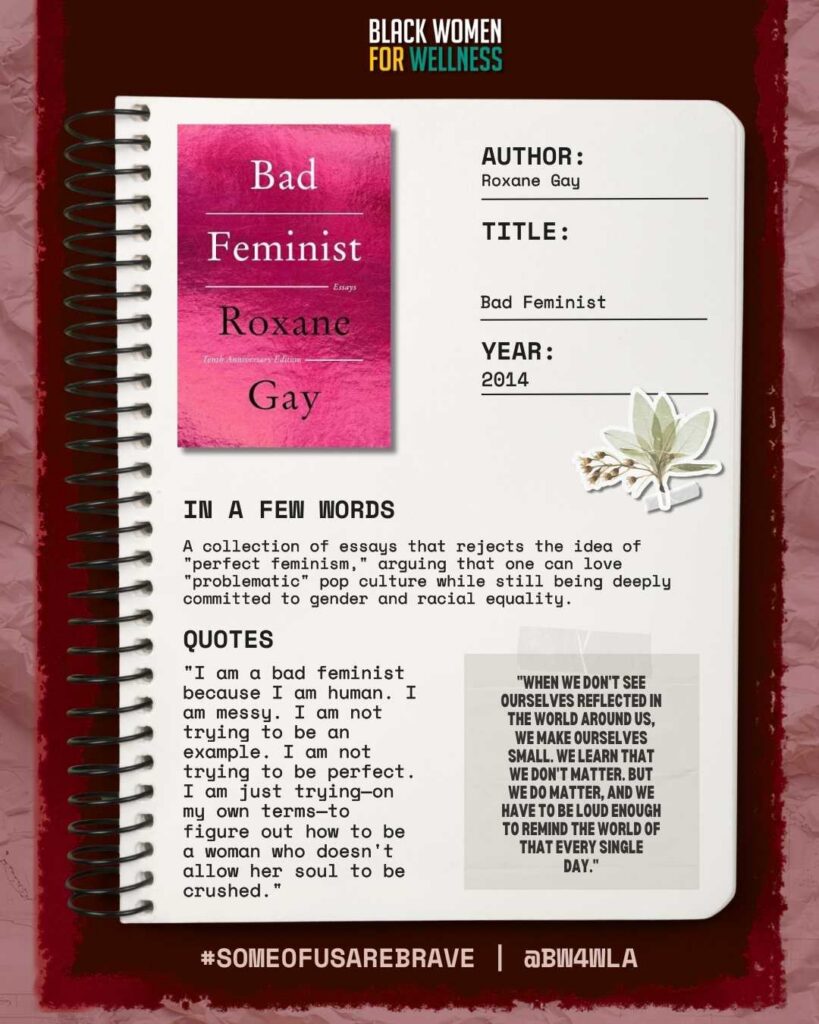
Quote:
“I am a bad feminist because I am human. I am messy. I am not trying to be an example. I am not trying to be perfect. I am just trying—on my own terms—to figure out how to be a woman who doesn’t allow her soul to be crushed.”