Black Women for Wellness 26th Annual Reproductive Justice Conference Featured Bold Abortion Care and Access Panel
Summary
In a world that demands Black women constantly push beyond their limits, the 2025 Reproductive Justice Conference centered a powerful theme rooted in self-determination — a commitment to protecting our bodies, honoring our choices, and unapologetically reclaiming our rest while balancing activism.
FOR IMMEDIATE RELEASE
Black Women for Wellness’ 26th Annual Reproductive Justice Conference Featured Bold Abortion Care and Access Panel
(Los Angeles, CA / August 8, 2025) — Black Women for Wellness (BWW) hosted its 26th annual Reproductive Justice Conference, Minding Our Own Black Business: Reclaiming Rest, Resilience and Liberation, on Thursday, August 7, 2025, at The California Endowment Center in Los Angeles, starting at 8:00 a.m. PT.
In a world that demands Black women constantly push beyond their limits, the 2025 Reproductive Justice Conference centered a powerful theme rooted in self-determination — a commitment to protecting our bodies, honoring our choices, and unapologetically reclaiming our rest while balancing activism.
This year’s conference included a main stage panel on abortion justice, titled, “Abortion Justice: A Conversation on Care, Criminalization, and Community Power.”
Abortion care has existed long before it was medicalized, legislated, or policed. Even in pro-choice states like California, Black women still face clinic closures, rising abortion costs, systemic barriers, and limited post-abortion support despite legal protections.
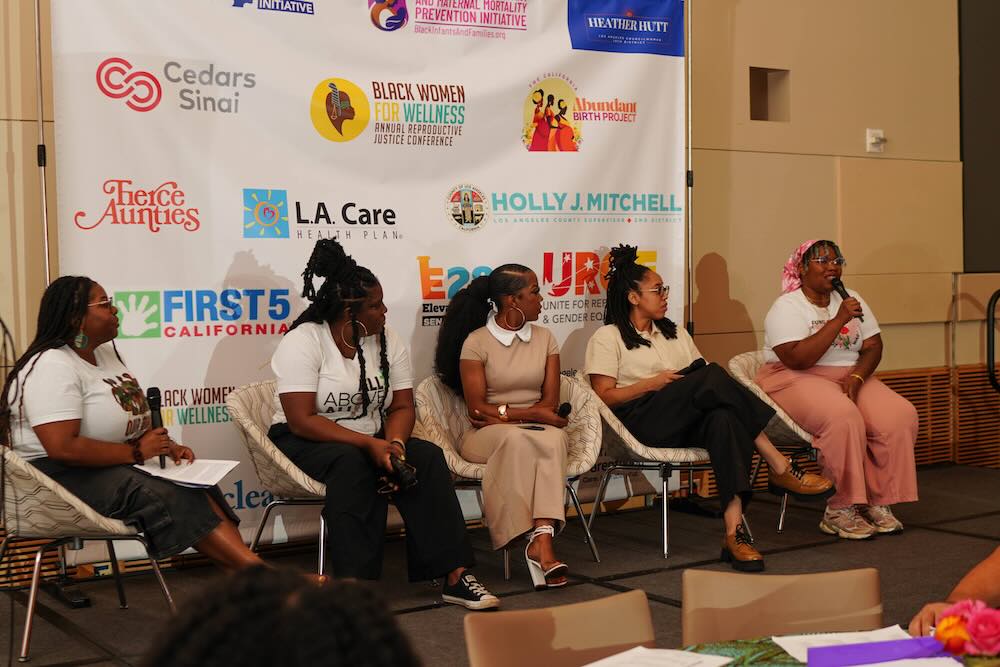
The panel was facilitated by Tyla Adams, Program Manager of BWW’s Sisters in Control Reproductive Justice Program. Panelists included:
- Andrea Howard, a full-spectrum doula, parent, placenta encapsulator, and budding herbalist
- Beulah Osueke, coach, strategist, organizer, and Executive Director for New Voices for Reproductive Justice
- Nancy Davis, maternal health and abortion access advocate, founder of the Nancy Davis Foundation
- Nourbese Flint, President of All* Above All and founding director of Black Women for Wellness Action Project
“I sit with the idea that the reason why I am here is there was somebody in my past that was in the middle of chattel slavery and believed that there was freedom for somebody down the line. And they lived and pushed and worked for — even though they never saw it — a freedom where I can sit here and for my job talk to you about abortion access,” Flint shared on the panel. “So if that could happen in one, two, three generations, imagine what can happen two to three generations from now? We have an incredible opportunity and I just want us to own that, to fight for it, to believe it and live in this radical joy of what’s possible.”
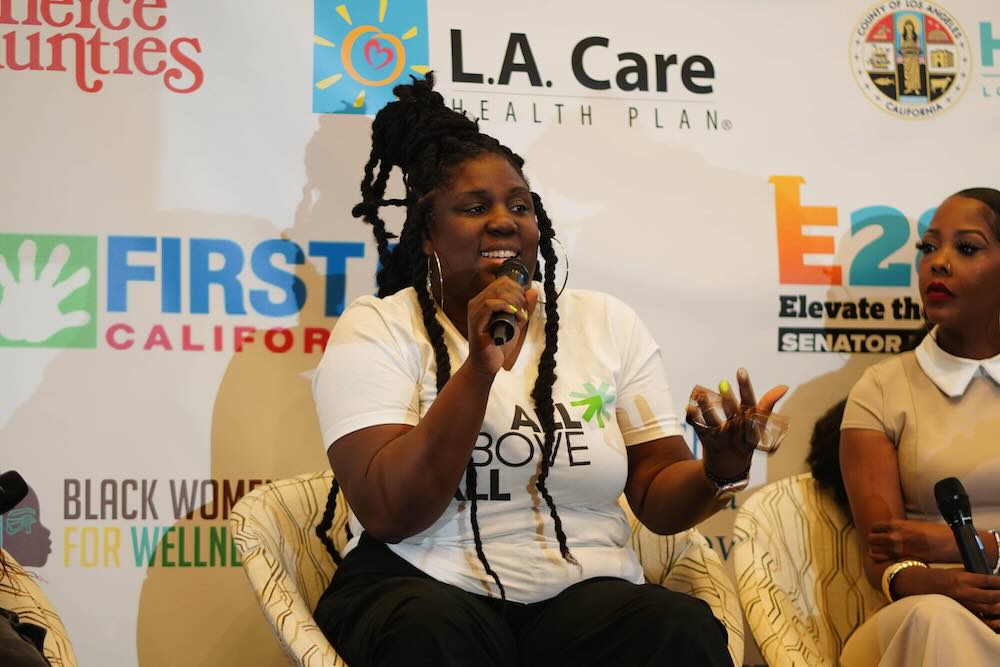
“When I think of collective liberation and collective freedom, it is something that we are striving toward. And once we get there—whether it’s abstract, or mental, or in our interpersonal relationships, whether it’s how we view and treat ourselves—we have to sustain it,” Osueke added.
“Something that I want to leave with you all is this: you do not have to be an academic scholar, you do not have to be an executive director, you do not have to be an organizer with decades under your belt. You have to be a person who feels and wants better… this movement is for everybody. We cannot stand on the sidelines and watch what we deserve just go down the waistline.”
The session explored the full spectrum of abortion care and justice, including:
- Current challenges facing clinics in California and across the country
- The legal landscape: state and federal bans, targeted litigation, and shifting court rulings
- The role of self-managed abortion and community access to resources like Plan C
- Abortion criminalization and its disproportionate impact on Black communities
- The growing cost of abortion and barriers to coverage
- The threat of fake abortion clinics, misinformation campaigns, and anti-abortionists
- Data privacy and digital surveillance concerns, from period tracking apps to border stops
- Reimagining abortion access as a safe haven in an increasingly authoritarian political landscape
- The critical need for holistic, community-rooted models of abortion support, including abortion doulas and healing justice frameworks
“We approached abortion not as a debate, but as a deeply human experience rooted in history, dignity, healing, and community,” said Adams, “because this conference was about reclaiming our care, our communities, and our power. From the critical insights of policy leaders to the wisdom of abortion doulas and advocates, we reclaimed our full spectrum of reproductive care. Because a legal right means little without real access.”
Conference participants also learned how to protect the reproductive health and overall well-being of Black women and girls through workshops and breakout sessions that highlighted:
- Maternal & Infant Health
- Civic Engagement
- Infertility & Fibroids
- Beauty Justice
- Environmental Justice
- Grown and Sexy (menopause + sexual health for women over 40)
- Men’s Track, and more
The event welcomed birth workers, healthcare professionals, youth leaders, elders, and community advocates into a space for dialogue, shared insights, restoration, and collective healing.
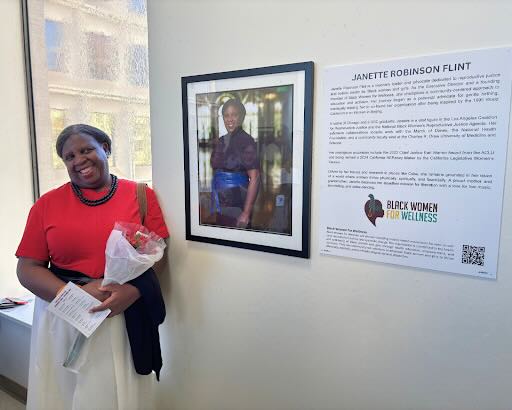
“Black women are not machines built to survive oppression. We are human beings with the right to rest, to joy, and to care,” said Janette Robinson Flint, Executive Director of Black Women for Wellness. “This year’s theme was a declaration rooted in the heart of the Reproductive Justice movement: the right to have children, not have children, and to parent in safe and sustainable environments. Reproductive Justice demands access and liberation. Minding Our Own Black Business was about balancing activism while reclaiming our time, health, and futures from systems that have long profited from our labor while ignoring our pain. This year we reimagined what true justice looks like.”
Find more photos from the 2025 RJ Conference here.
About Black Women for Wellness
Founded in 1997, Black Women for Wellness is a California-based nonprofit committed to the health and well-being of Black women and girls. Through education, policy advocacy, and leadership development, BWW advances reproductive justice and builds community power.
Press contact:
Myeisha Essex
Communications Director
[email protected]