
By Myeisha Essex
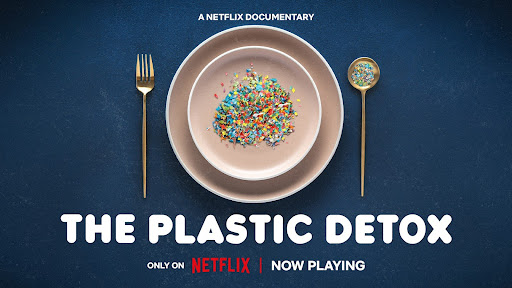
There’s a new documentary streaming on Netflix that we are urging everyone to watch. The Plastic Detox premiered on March 16th, and it offers a look into why Black Women for Wellness has been preaching that plastic pollution, at its core, is a reproductive justice issue.
The uncomfortable truth is, the plastic problem isn’t solely about plastic trash in our environment. Plastic and plastic chemicals are in our homes, our products and in our bodies! The Plastic Detox helps make that reality impossible to ignore by following six couples struggling with unexplained infertility who commit to a 12-week plastic detox. Each couple had been trying to conceive (some for more than a decade) without success.
Though the film should have included at least one Black couple – especially given the ongoing Black maternal mortality crisis and rising infertility among Black women – what happens is eye-opening, and the documentary tells us a lot about the hidden health threats we live with every day.
Here are 5 takeaways we took from the film and why they matter for our health, our communities, and our future:
Takeaway 1: This Is a Fertility Crisis & Plastics are Part of the Problem
One of the most urgent truths in the documentary is the growing fertility crisis. Shanna Swan, PhD, is an award-winning scientist who found that sperm counts and fertility rates are declining at a pace too rapid to be explained by genetics alone.
Through her research, she connected this trend to environmental exposure, in particular chemicals used in plastics. Many of those chemicals are endocrine disruptors, which interfere with our hormone systems that regulate reproduction. When they are disrupted, the effects show up as difficulty conceiving, hormonal imbalances, and rising rates of infertility.
Takeaway 2: Plastic Exposure Is Built Into Our Daily Lives
Plastic is everywhere. It’s in our food packaging, clothes, hair products, fragrances, kitchen utensils, toys, furniture and even shoes.
Over time, that exposure accumulates and microplastics make their way into our brains, our blood, and our unborn children. But, our bodies are no place for plastic! The health consequences are linked to rising rates of chronic illnesses like cancer, and for millions of couples, this chemical exposure is harming their fertility and stealing their right to start a family.
Takeaway 3: Black Communities Are Carrying a Heavier Burden
While The Plastic Detox highlights the science, it doesn’t fully center who is most impacted. Out of the six couples struggling with infertility in the documentary, not one is Black.
For Black women, exposure often starts earlier and the stakes are higher. Products marketed to us — including our hair, beauty and self-care products — have been found to contain higher levels of these harmful chemicals.
Our neighborhoods are also more likely to be near oil wells and industrial facilities, as shown in the film with Louisiana’s “Cancer Alley.” These communities live in close proximity to the fossil fuel industry, where profits from plastic production come at the cost of human health. Our exposure to these environmental harms starts early and accumulates over a lifetime.
At Black Women for Wellness, we witness every day how proximity to pollution translates directly into health disparities. For instance, the largest urban oil field in the US, the Inglewood OIl Field, is in our community of South Los Angeles, and oil extraction is the first stage of the lifecycle of plastic. Ongoing urban oil drilling happens right next to families, and it causes severe concerns such as respiratory and reproductive health harms. Overall, Black women face higher rates of fibroids, breast cancer, and chronic conditions tied to hormone disruption and over-exposure to environmental pollution is part of why.
This is systemic exposure, and yet, our stories are too often missing from the conversation.
Takeaway 4: The Health Impacts Go Far Beyond Fertility
Fertility may be the entry point, but it is not the only concern. Dr. Jasmine McDonald makes this clear in the film, and her research is truly groundbreaking – albeit equally heartbreaking.
The same chemicals found in plastics have been linked to a range of health issues, including early puberty, obesity, and increased risk of breast cancer. When young girls are exposed to hormone-disrupting chemicals earlier in life, they may begin menstruating earlier and that extends their lifetime exposure to estrogen and increases long-term health risks.
Takeaway 5: Small Shifts Matter
One of the most powerful parts of the film is what happens with the couples who had been struggling with infertility. Spoiler alert: after making intentional changes to reduce their exposure to plastics and other synthetic chemicals, their bodies began to respond. Within weeks, there were signs of change.
After watching the film, this felt like a glimmer of hope. We may not be able to escape all the plastics in our environment, but if we are intentional about making safer choices, our bodies are responsive and reducing harm can make a real difference!
These small shifts can include choosing products without added fragrances, replacing plastic with glass or metal in our kitchens, and choosing clothes that are made from natural materials like cotton. (Because textiles are the biggest cause of microplastics in the environment!)
That said, being more intentional about what we bring into our homes and onto our bodies can only take us so far, and not every community has access to affordable plastic alternatives. We need our governments to stop allowing endless plastic production, to ban harmful chemicals of concern, and to protect our health and well-being over profits. The film highlighted how hard it was for many of the couples to make health protective consumer choices; this is a violation of the reproductive justice tenets which require bodily autonomy for all. We don’t have bodily autonomy in a world ridden with harmful plastics and plastics chemicals, and fundamentally, the burden shouldn’t be solely on consumers.
At Black Women for Wellness, mitigating the lifecycle of plastic pollution is a core part of our Environmental Justice work because we understand what’s at stake and our health is not separate from our environment. We are working for systems change by advocating for the UN Global Plastics Treaty to limit plastic production, and we are working at the state level in CA to push for reduction as well.
Our Environmental Justice – Built Environment team is committed to:
- Educating our community about the health impacts of plastic
- Advocating for policies that reduce exposure & limit plastic production
- Working in coalition with groups like Environmental Justice Communities Against Plastic (EJCAP) and Break Free from Plastic (BFFP)
- Uplifting the voices and lived experiences of Black women in environmental health conversations at a local, state and global level
And until our environments are free from toxic exposure, our reproductive freedom will always be at risk. We deserve to thrive in bodies that are protected and in environments that are built with us in mind.
For more information, check out BWW’s Lifecycle of Plastic Pollution brochure, the Lifecycle of Plastics in South LA report, and UCLA Luskin’s report on plastics and their link to fossil fuels and oil drilling, where BWW served in an advisory role. You can also follow us @BW4WLA.